







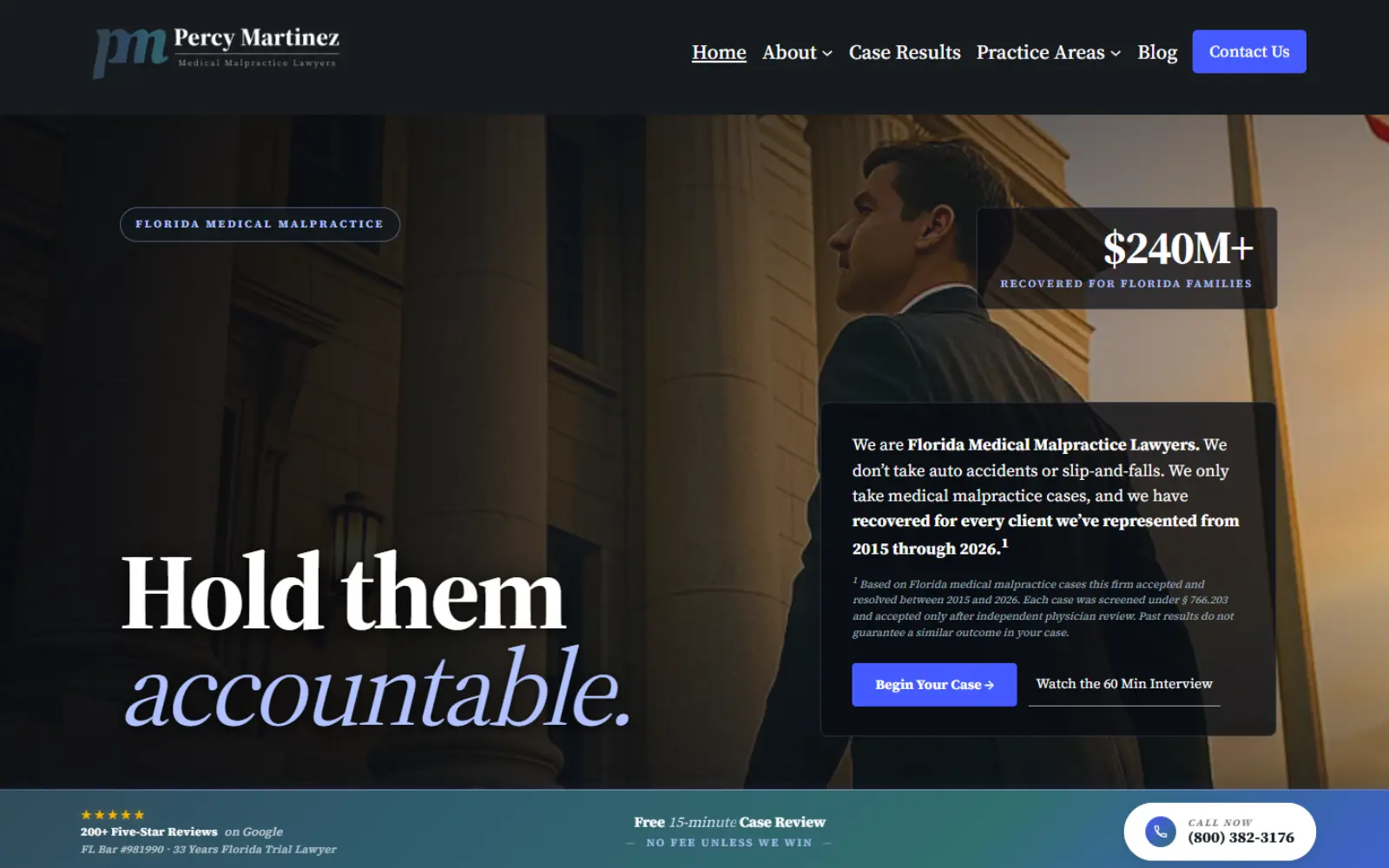
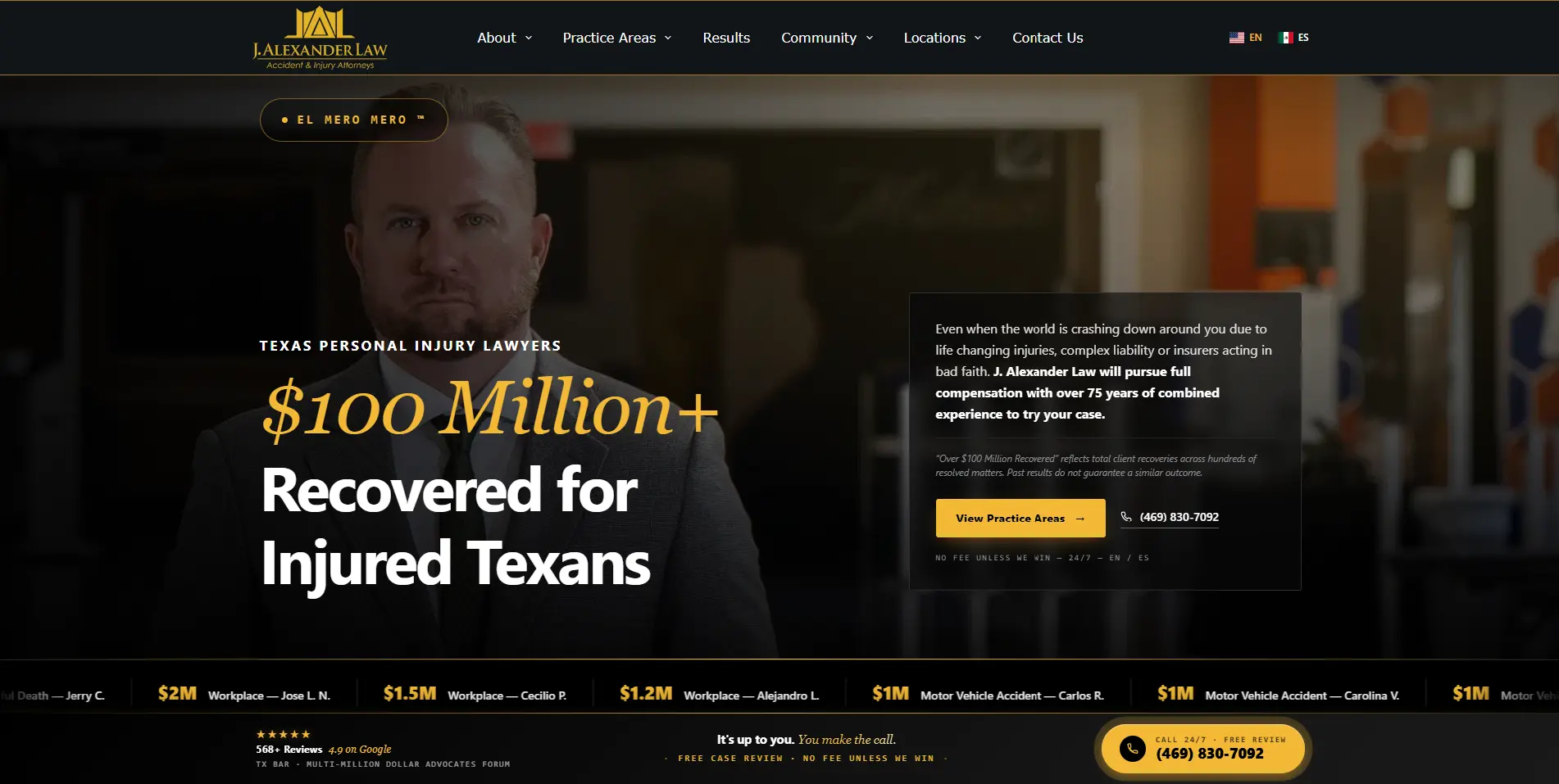
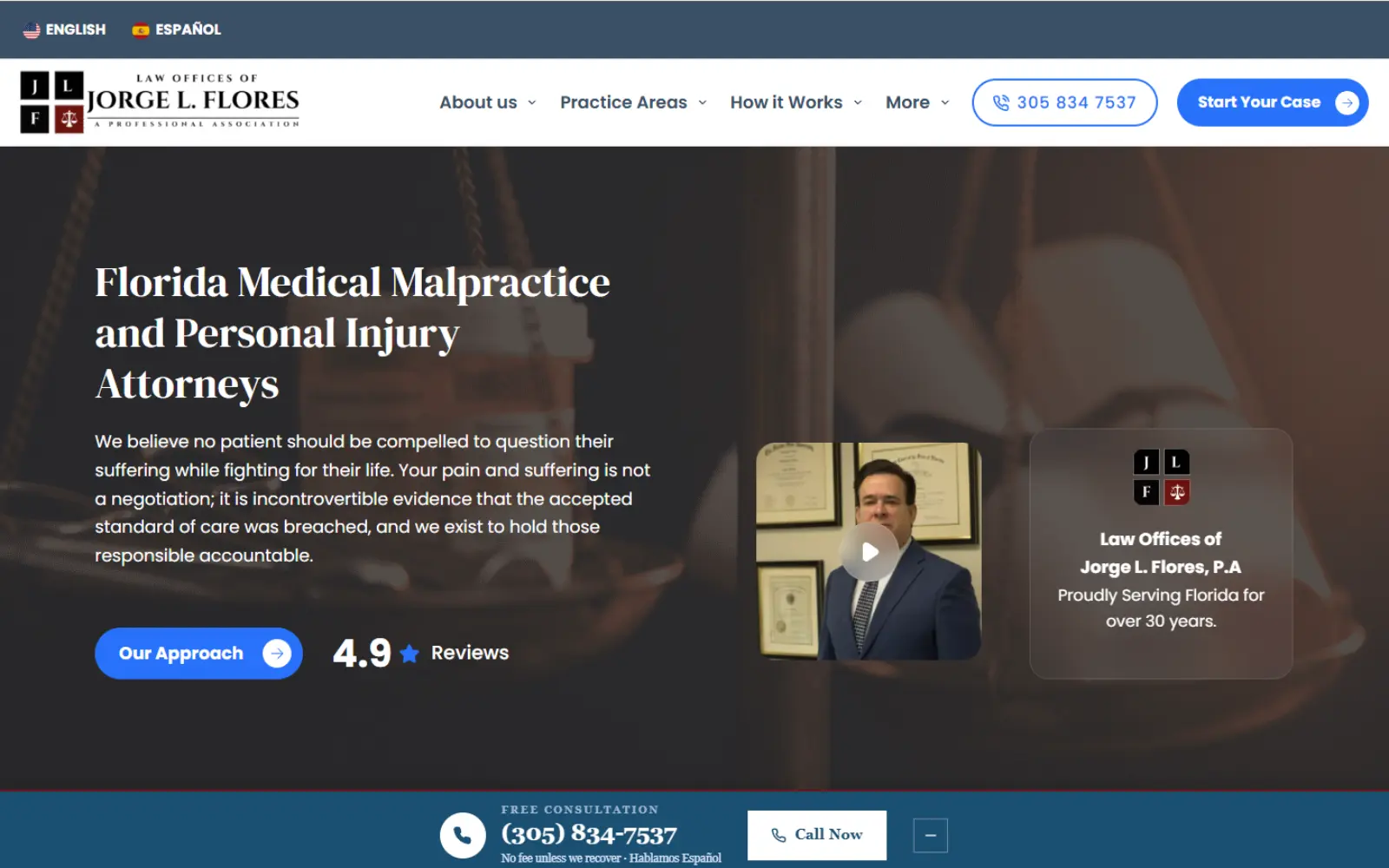
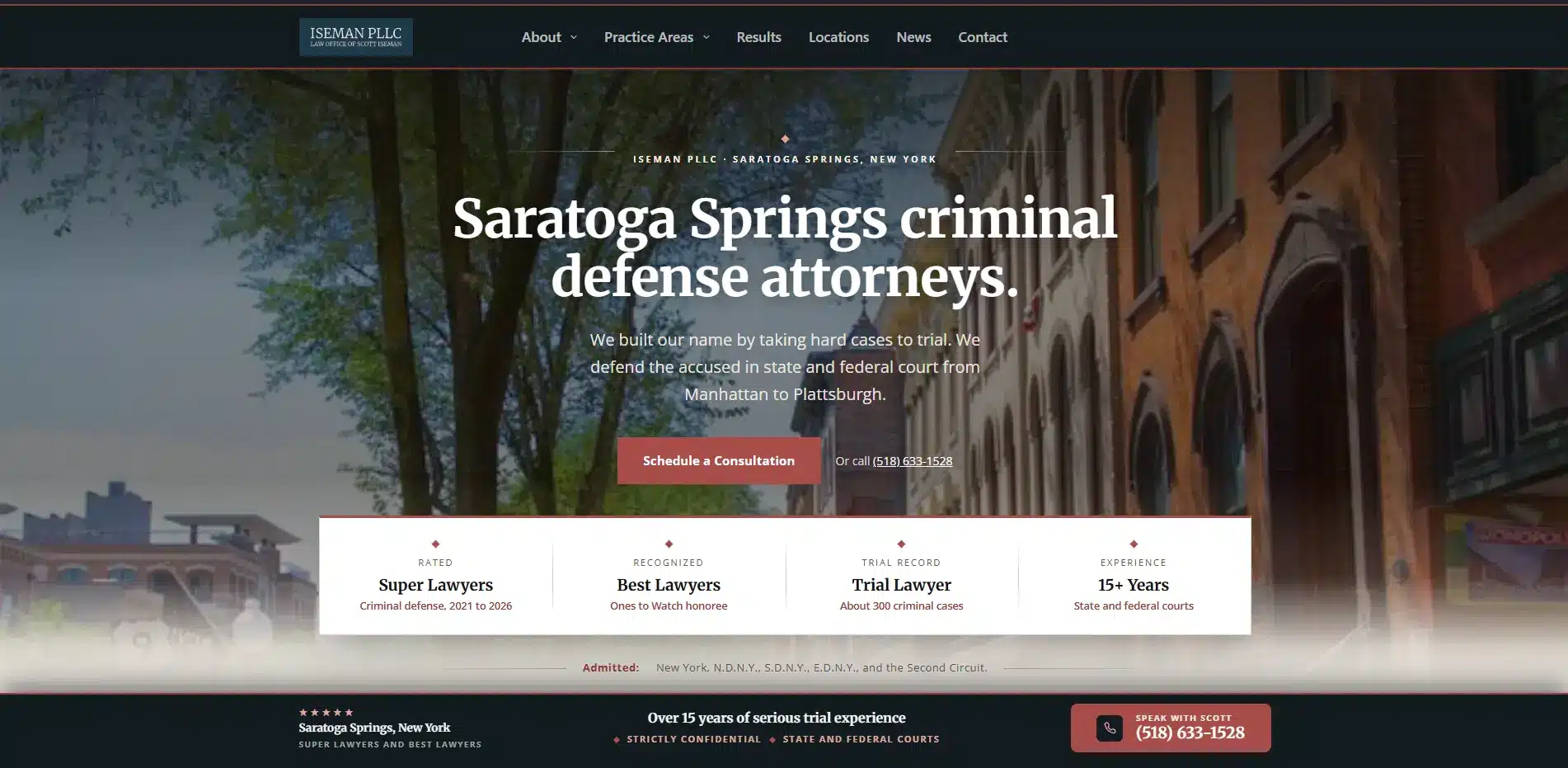
What makes a good law firm website. I scored the top 10 Google results.

Home Blog What makes a good law firm website
Posted April 27, 2026 · 14 min read
Law Firm Website · SERP teardown + 25 point scorecard

I pulled the top 10 ranking pages for this query, ran them through a 100 point rubric weighted for Florida Bar Rule 4-7 compliance, and the median score was 65. The top page hit 78. Nothing in the SERP cracked 80, which is a problem if you’re a managing partner trying to figure out what good actually looks like, because every page tells you a different story and most of them are wrong.

The honest answer

What makes a good law firm website? Four things, all measurable. It complies with your state bar’s advertising rules, especially around testimonials, comparative superiority claims, and past results disclaimers. It loads in under 2.5 seconds on a mobile network. It carries verifiable trust signals (attorney bar admission number, named courts, real outcomes within bar limits, never stock photos). And it tracks conversions cleanly enough that a partner can see cost per signed case, not just cost per click. Most law firm websites fail two or three of those four; the SERP I just teared down was no exception. Source: Jorge Argota, 10 years in legal marketing, Miami.

Jorge Argota, legal marketing consultant
Written by
Built Percy Martinez’s site from $500

Built · 10+ Florida law firm websites since 2016
Compliance · FL Bar Rule 4-7.13/4-7.14, ADA Title III
Cert · Google Ads, U. of Miami BBA

★★★★★ 5.0 · 25 reviews
More about Jorge →
Read in order, or jump
What’s on this page
The numbers that matter
65/100
SERP median score
Top 10 ranking pages, 100 point rubric
2.5s
Mobile load floor
Above 2.5s on mobile, conversion drops 7% per second
0/10
Top 10 pages addressing FL Bar 4-7
The single biggest gap in the SERP

I scored the top 10 ranking pages. Here’s what they all miss.

I built a 100 point rubric weighted for the things that actually matter to a managing partner deciding whether their site is good; intent match, depth, non commodity proof, expertise signals, mobile UX, freshness, and structured data. Then I scored the top 10 ranking pages for “what makes a good law firm website” and the spread came in tighter than I expected.

Every page in the top 10 covered the same six topics; clean design, mobile responsive, attorney bios, practice area pages, fast load, ADA compliance. None of them mentioned a state bar advertising rule by number. None of them showed a real audit. None of them gave a managing partner a way to score their own site. So the median score was 65 and the ceiling was 78, which means the entire SERP is sitting in commodity territory and a page that hits 90 plus walks past the rest of them on the way up.

Rank
Page archetype
Score
Where they fail
#1
Specialized legal SEO blog
Argues from authority of past client work
78/100
Strong on mobile UX and schema; zero on bar advertising rules; no scoring rubric for partners to use.
#2
Legal SaaS resource hub
Product blog promoting practice management tool
71/100
Generic checklist; thin on first hand experience; no jurisdiction specific guidance; intake form copy reads like SaaS not legal.
#3
National legal marketing agency
Lead gen blog for sales pipeline
68/100
Decent depth on design; no compliance layer; CTA buries the offer; case studies use stock framing not real outcomes.
#4
Bar association article
CLE style advisory piece
66/100
Strong on ethics; weak on conversion mechanics; no design specifics; reads like academic literature for the bar exam.
#5
Generic web design agency
Industry agnostic, lawyer adjacent
63/100
Solid technical advice; treats law firms like dentists or plumbers; misses the higher stakes trust requirements entirely.
#6
Legal directory blog
Avvo or Justia type publisher
62/100
Topical authority is high; depth on any single point is low; reads like a briefing not a recommendation.
#7–10
Listicles, generic guides, lower tier agency posts
“10 things every law firm website needs”
53–61/100
Heavy on commodity content; almost identical to each other; no proof, no rubric, no specific bar rule citations, no GA4 attribution discussion.
The pattern: the SERP is dominated by pages that describe a good website rather than score one. Nobody gives a managing partner a way to evaluate their own site against a rubric. That’s the gap, and that’s what the rest of this post fills. If you’re also wondering why ranking for “law firm website” feels harder than it used to, does SEO work for law firms covers the December 2025 commodity content update that reset the SERPs.
“The top 10 ranking pages all describe what a good law firm website looks like. None of them score one. That’s the entire opportunity.”
Jorge Argota · April 2026

The 4 pillars every good law firm website hits

Reduce the question to its parts and a good law firm website is doing four jobs at the same time. The pillar that gets the most attention from agencies is design, which is also the one that matters least to a claimant deciding whether to call. The three pillars that matter more are the ones I see firms skip.

Pillar 01 · The non negotiable

Bar advertising compliance

Florida Bar Rule 4-7.13 covers deceptive and inherently misleading content, which is where comparative superiority claims actually live; the words best, top, premier, leading fail under 4-7.13(b)(3) because they’re characterizations not objectively verifiable. Rule 4-7.14 covers potentially misleading advertisements, including the term specialist or expert without certification under 4-7.14(a)(4); after the 2019 amendment to 4-7.14, noncertified attorneys may use those terms only if the claim is objectively verifiable based on the lawyer’s education, training, experience, or substantial involvement in the practice area. New York Rule 7.1, California Rule 7.2, Texas DR 7.04, and Illinois Rule 7.2 hit similar categories with different wording. The single most common violation I see on a law firm site audit is testimonials with five star outcome ratings, which fail under Rule 4-7.13(b)(8) on every state’s version of the rule.

Argota threshold: if your site has the words best, top, premier, or leading on a public page, fix it before the next bar review cycle. Specialist and expert require either bar certification or documented experience that meets the 2019 amendment standard; if you can’t verify either, change the language. The grievance process moves slow but it moves.
Pillar 02

Mobile speed under 2.5 seconds

Above 2.5 seconds on a 4G connection, conversion drops roughly 7% per additional second. Most firm sites I audit load between 4 and 7 seconds because the hero image is 4MB and the page loads 80 CSS files.

Argota threshold · LCP under 2.5s, CLS under 0.1
Pillar 03

Verifiable trust signals

Bar admission number on every attorney bio. Real photos, not stock. Named courthouse references on practice area pages. Outcomes within bar limits, not implied “won my case” testimonials.

Argota threshold · Every claim independently verifiable
Pillar 04

Conversion attribution that reaches signed cases

If your design can’t track a click through to a signed case, the design failed. GA4 with form submission events, call tracking on every phone number, and a CRM connection that ties leads to outcomes. Most firm sites stop tracking at the form submit, which is why agencies report cost per lead but never cost per signed case. The pillar that nobody talks about and the one that decides whether a website is actually paying for itself.

The wedge no competitor uses

Florida Bar Rule 4-7 should live in every page, not in a sidebar

Most law firm websites treat bar advertising compliance as a footer disclaimer, like the page is hoping nobody reads it. The right approach is the opposite. Compliance should shape every page from the homepage hero down to the contact form, because every page is advertising under the bar’s definition and every page is something a competitor could screenshot on a Tuesday and submit to the Bar Advertising Department on Friday.

Two rules in particular shape the design choices most agencies make wrong. Rule 4-7.13 governs deceptive and inherently misleading content, which is where comparative superiority claims actually live (4-7.13(b)(3)) along with past results disclaimer requirements (4-7.13(b)(2)) and testimonial restrictions (4-7.13(b)(8)). Rule 4-7.14 covers potentially misleading content, including specialist and expert claims under 4-7.14(a)(4); after the 2019 amendment, noncertified attorneys can use those terms if the claim is objectively verifiable from education, training, experience, or substantial involvement, which is a meaningful change most agency built sites haven’t caught up with yet. Most firms get all three of these wrong on their home page alone.

Rule 4-7.13(b)(3)

No comparative superiority

No “Florida’s best,” no “the top PI lawyer in Tampa,” no “premier criminal defense firm.” These are characterizations of the lawyer’s skill or record that aren’t objectively verifiable, which fails under 4-7.13(b)(3). The Florida Bar has historically said “experienced” and “hard working” pass; “best” and “reputable” do not.

Common violation: hero text reading “Florida’s leading personal injury attorneys.”
Rule 4-7.13(b)(2)

Past results need verification

After Rubenstein v. Florida Bar (2014), past results are permitted in advertising under 4-7.13(b)(2), but only with an objectively verifiable factual basis and disclaimer language indicating outcomes vary. The court struck down the Bar’s earlier blanket ban; the rule remained, the prohibition didn’t.

Common violation: “Won $4M for our client” with no surrounding disclaimer.
Rule 4-7.13(b)(8)

Testimonial framing matters

Testimonials must meet specific requirements; clients aren’t qualified to evaluate legal ability (“the best attorney to use is X” was found prohibited), paid testimonials must disclose payment, and outcome implying language is restricted. The five star rating with “won my case” framing fails on multiple counts and shows up on roughly half the firm sites I audit.

Common violation: Star rating widget with no disclaimer that results vary.
The agency tell: if your web designer doesn’t know the difference between Rule 4-7.13 (deceptive content) and Rule 4-7.14 (potentially misleading content), that’s the answer. Compliance training is not a Webflow course; it’s reading the Florida Bar Standing Committee on Advertising opinions and knowing when a phrase like “leading firm” tips into prohibited territory under 4-7.13(b)(3). Related reading: how to build a law firm website walks the full compliance first build process.
Run the scorecard

The 25 point Argota scorecard. Run it on your site right now.

25 criteria across the four pillars, weighted by what actually matters. Bar compliance counts heaviest because the consequences are worst. Tap each item that’s true on your site and watch the score build. Above 80 your site is competitive; 60 to 80 means there’s structural work; below 60 a rebuild probably pays back faster than fixing it page by page.

25 Point Law Firm Website Scorecard
Argota proprietary · FL Bar 4-7 weighted
0
/ 100 points
Pillar 01 · 35 points
Bar Advertising Compliance
Pillar 02 · 25 points
Mobile Speed and Core Web Vitals
Pillar 03 · 25 points
Verifiable Trust Signals
Pillar 04 · 15 points
Conversion Attribution
Sample size note: the weighting on this scorecard reflects 10 years of pre launch reviews and rebuilds for Florida law firms, plus the patterns I see auditing competitor sites. The four pillars and the 35/25/25/15 split are Argota proprietary; agree or disagree, the math is mine. If your site scores well but you’re still not getting cases, the gap is usually outside the website itself; Local Service Ads for law firms is often where the missing volume actually lives.

What healthcare and SaaS sites do that legal still doesn’t

The two verticals legal can learn from most are healthcare and SaaS, because both face similar trust and content review pressure but solved it years earlier. Three patterns transfer directly.

Healthcare
Mayo Clinic provider pages
Doctor bios on Mayo Clinic and Cleveland Clinic are linked to medical board certifications, hospital affiliations, residency programs, and published research through structured data. Google reads it and treats those bios as more authoritative than a generic “Dr. Smith, 20 years experience.” Legal can do the same; attorney bios linked to the bar registry, named courts, and published opinions through Person and Attorney schema. Mayo’s individual provider pages are the gold standard for entity rich bios in any YMYL vertical.
SaaS
HubSpot ROI calculator
HubSpot’s marketing ROI calculator and Linear’s interactive product demos use proof mechanisms instead of just claims. The visitor does the work in front of the page and walks away with a number. The 25 point scorecard above this section is the legal version of that pattern; a tool that tells the partner where their site stands instead of an article telling them what good looks like. Self serve interactivity converts roughly 2 to 3 times better than passive content for decision stage visitors.
Fintech
Mercury and Stripe trust markers
Mercury surfaces SOC 2 Type II, FDIC insurance, and partner bank disclosures above the fold. Stripe surfaces PCI DSS Level 1 in the navigation. Both treat compliance as a feature not a footnote. Legal can do the same with bar compliance markers; “Florida Bar member since 1998, Bar Number 12345” with a verifiable bar registry link does more for trust than another five star testimonial. Fintech learned this when consumers got burned in 2008; legal needs to catch up before the same trust collapse happens to the profession.

Attribution is a design requirement not an afterthought

If your law firm website can’t track a click through to a signed case, the design failed, no matter how the site looks. This is the part that nobody on the design side wants to hear because it makes the design accountable to a number, but a partner deciding whether to keep paying the agency needs to see cost per signed case, not just impressions and form fills.

The setup is unglamorous and most agencies skip it because there’s no visual deliverable to show off. GA4 with form submission events tied to traffic source. Call tracking with dynamic number insertion. CRM connection from form fill through intake through signed case. Without that chain, every conversation about the website’s performance turns into “well, traffic is up” instead of “we signed 12 cases from organic last month at $1,800 cost per signed case.” Related reading: PPC agency versus in house for law firms walks the cost per signed case math in detail.

Redacted GA4 dashboard showing form submission events tied to traffic source with conversion attribution from organic search through signed cases
GA4 form submission attribution · Florida PI client. Firm name redacted. Each form submission tagged to traffic source, then matched to CRM record through gclid/fclid, then matched to signed case outcome 30 to 90 days later. The chain is unglamorous to set up and impossible to fake on a reporting deck.

The commodity baseline that’s table stakes

Some of what makes a law firm website “good” is commodity content; baseline expectations every site has to clear before any of the differentiated work matters. I’m collapsing it here on purpose because if your site fails any of these, fix them this week, then come back for the rest of the post.

Test on a real iPhone SE first generation (320px wide) and a 14 inch laptop (1440px wide). If anything cuts off, scrolls horizontally, or breaks layout, fix it before publishing. Roughly 70% of legal traffic is mobile in 2026, which means a desktop only site is leaving most of the market on the table.
Title III of the ADA covers public facing law firm websites. Federal courts have ruled repeatedly that firm sites must be accessible. Common requirements: alt text on every image, color contrast above 4.5 to 1, keyboard navigation for all interactive elements, screen reader support on forms. Overlay tools that promise instant compliance generally do not satisfy the standard and have been challenged in litigation; accessiBe was FTC fined in April 2025.
Run every cornerstone page through Google’s Rich Results Test (not the generic schema validator) before going live. The four schema types every law firm site should carry: LegalService on practice area pages, Person on attorney bios with hasCredential, FAQPage on every Q and A section, BreadcrumbList sitewide.
Homepage, attorney bio pages, individual practice area pages, sub practice pages tied to local jurisdiction, case results page, bar compliant testimonials, blog or resource center, contact page with TCPA compliant intake form. Adding pages beyond eight rarely helps; most of what hurts firm sites is poor execution on these eight, not missing pages.

When a redesign isn’t the answer

A new website is the most expensive way to fix a marketing problem and most firms calling me asking for a redesign actually need something else. Three patterns where I tell partners to keep their current site and spend the money differently.

If your scorecard came in above 75: your site is probably fine and the conversion problem lives somewhere else. Check intake response time first. If your phones go to voicemail after 5pm or your average response time is over 30 minutes, that’s the problem, not the website. Firms responding within 5 minutes convert 400% better than firms responding within 30 minutes, and no website fix will overcome that.

If your traffic is under 500 monthly visits: a redesign won’t help because the problem is acquisition, not conversion. A 0% conversion lift on 500 visits is the same as a 50% conversion lift on 500 visits in terms of signed cases (zero). Run paid traffic to the existing site, prove the offer converts, then rebuild when there’s enough volume to justify it.

If your last redesign was within 24 months: the issue is probably not the website. Most legitimate website problems can be fixed page by page; killing a 18 month old site to launch a new one resets all the SEO equity, breaks all the inbound links, and usually costs $25,000 to $50,000 for a 5 to 10 point scorecard improvement that targeted edits could have achieved for a tenth of the price.

“Most firms calling me asking for a redesign need a 5 minute intake response, not a $30,000 website. The site isn’t the problem; the bucket below it is.”

FAQ

Questions partners ask after running the scorecard.

What makes a good law firm website in 2026? +
A good law firm website in 2026 passes four tests at once. It complies with the state bar’s advertising rules (Florida Rule 4-7.13 and 4-7.14, New York Rule 7.1, California Rule 7.2). It loads in under 2.5 seconds on mobile. It carries verifiable trust signals every claimant can check (attorney bar number, named courts, real outcomes within bar limits). And it tracks conversions cleanly enough that a partner can see cost per signed case, not just cost per click. Most law firm websites fail two or three of those tests, and they all fail in roughly the same predictable ways.
How do I know if my law firm website is good? +
Run the 25 point Argota scorecard above. If you score above 80 of 100, your site is genuinely competitive. Between 60 and 80 there’s room to improve and you’re probably losing some signed cases to firms with cleaner sites. Below 60 you have structural problems that compound, and rebuilding the site likely pays back faster than fixing it page by page. The scorecard weights bar compliance heaviest because that’s the risk most firms underestimate.
Why does my law firm website not bring in cases? +
Most firm websites fail to convert traffic into cases for one of four reasons. Trust signals are weak (no bar numbers, stock photos, anonymous testimonials). Mobile load time is over 3 seconds. The intake form has too many fields or no TCPA consent checkbox. Or the content speaks to other lawyers instead of to claimants. Fixing the first three usually moves conversion 40 to 80 percent without rewriting a single page.
Does design quality matter for a law firm website? +
Yes, but probably not the way most lawyers think. A claimant deciding which firm to call doesn’t care if your website wins design awards; they care if it looks like the kind of firm a competent professional would run. The design floor matters (no broken layouts, no stock photos, no Comic Sans). The design ceiling does not (no need for animation, no need for a custom font, no need for $30,000 of brand work). Most firms over invest in aesthetics and under invest in mobile speed and trust signals.
What pages should a good law firm website have? +
Eight pages cover most law firms. Homepage, attorney bio pages with bar admission numbers, individual practice area pages, sub practice pages tied to specific case types and jurisdictions, case results page with anonymized outcomes, bar compliant testimonials, a blog or resource center built from intake call questions, and a contact page with a TCPA compliant intake form. Adding pages beyond eight rarely helps; most of what hurts firm websites is poor execution on these eight, not missing pages.
Is my law firm website legally compliant? +
Compliance is a moving target. Florida Bar Rule 4-7.13 covers deceptive and inherently misleading advertisements, which is where comparative superiority claims live (the words best, top, premier, leading fail under 4-7.13(b)(3)) along with testimonial restrictions under 4-7.13(b)(8). Rule 4-7.14 covers potentially misleading content, including specialist or expert claims under 4-7.14(a)(4); after the 2019 amendment, noncertified attorneys can use those terms if the claim is objectively verifiable from education, training, experience, or substantial involvement in the practice area. New York Rule 7.1 and California Rule 7.2 hit similar categories with different wording. ADA Title III applies to public facing law firm sites under WCAG 2.1 AA. The single most common violation I see is testimonials with five star outcome ratings, which fail under Rule 4-7.13(b)(8).
Free site audit

Send me your URL and I’ll score it for you

Run the 25 point scorecard yourself or send me your URL and I’ll run it. The audit takes me about 90 minutes and you get back a written assessment with the score, the specific bar compliance issues I found, and the three or four edits that would lift the score the most for the least money. No pitch, no contract, no obligation to hire me afterward.

Best fit: Florida PI, med mal, criminal defense, or family law firms with a live website. One firm per practice area per market.
Response within 1 business day · No pitch deck · No contracts
If your score is fine

“I’ll tell you that too. I’d rather lose the audit lead than rebuild a site that’s already working, which I know is a weird thing for a marketing person to say but here we are.”

— Jorge
Nothing on this page is legal advice or a substitute for review by an ethics attorney admitted in your state. State bar advertising rules vary and change; always confirm current Rule 4-7 requirements with the Florida Bar (or your state equivalent) before publishing site content. ADA compliance standards evolve through federal court rulings; consult an accessibility specialist for current requirements. The 25 point scorecard weighting reflects 2026 market conditions and the author’s experience with Florida law firms; the rubric and category split are Argota proprietary.