
Jorge Argota Process · From first call to first signed case

How it works.

Five steps. The first one is a feasibility check that turns down roughly a third of the firms that contact me, because the math will not produce signed cases at a profitable cost. The other four happen only if the math works. Everything is owned by the firm at the end.

★★★★★ 5.0 Google rating 44 of 50 spots open in 2026 · one firm per practice area per metro
The process at a glance OPEN
Inbound declined
~33%
Turned down at step one because the math will not work.
Rollout window
90days
Tracking, foundation, paid media. Phone rings in week six.
Intake target
<5min
Industry average is 47 hours. That gap is where budget dies.
Reported each month
1number
Cost per signed case. Source, practice area, metro break out underneath.
Step 01 starts free 72 hr turnaround
· Section 01 · Why five and not four

Most agency process pages are the same four words.

Consult, strategy, launch, report. The verbs change but the shape is identical. My process adds a step before all of that and a step inside the launch that the template skips entirely.

The first missing piece
A feasibility check, before anything is signed.

Some firms should not spend money on marketing yet. Saying that on the first call is more useful than dressing up a retainer that will not produce signed cases. About a third of the firms that send me an inbound message hear no at this step, with a written explanation of why and what would need to change for it to work later.

The second missing piece
Intake, treated as its own step.

Most agencies hand leads off and assume the firm will catch them. Most firms do not. The average law firm takes 47 hours to return a new intake call, and by then most leads have already retained somebody else. That gap is where the budget dies. So intake gets fixed before the first ad runs, not after the first month of disappointing reports.

What that produces
Reporting that names cost per signed case.

The monthly report tracks one number against the firm’s actual revenue. Source, practice area, and metro all break out underneath it. Impressions and clicks live in the appendix because impressions and clicks have never paid an associate’s salary. The firm owns every asset the engagement produces, on infrastructure the firm controls, with a month-to-month engagement after the first ninety days.

· Diagnosis · Why a third hear no

Step one rejection: the four reasons the math does not work.

Roughly a third of inbound firms get turned down at the feasibility check. The reason is almost always one of these four. Listed in the order they tend to surface.

~33% of inbound · written report in 72 hrs
  • × Budget too small for the market. A $2,000 a month spend cannot move signed cases in a market where competitors are spending $50K a month and the cost per click runs over $300. The physics of the auction will not allow it. Come back when budget can support the floor for the market, or pick a less saturated metro for the practice area.
  • × Practice area saturated past arbitrage. Every Local Service Ads slot is taken, every organic top-ten result is locked in by firms with five-plus years of authority, and entry costs more than the case value supports. Consider a related practice area where the firm already has expertise but the market still has open ground.
  • × Intake speed will not produce conversions. If the firm is taking two days to return a new lead’s call, no amount of marketing makes the unit economics work. A 47-hour callback time at a $300 cost per click means a 3% conversion rate on something the firm is paying $10K for. Fix intake speed first, alone, then revisit. Sometimes a 90-day intake-only engagement is the right place to start.
  • × Case mix does not support the cost per click. A firm that signs ten soft tissue cases a month has different ad economics than one that signs two TBI cases. If the average case value cannot support the cost of the click in the firm’s zip code, the math will not pencil out regardless of execution quality. Either shift the case mix toward higher-value retainers first, or accept that paid is not the right channel and the engagement should be organic-only.
· Section 02 · The five steps

From first call
to first signed case.

Five steps in order. The first is a stress test on whether marketing will produce signed cases at all. The next three build the engine. The fifth is the part most agencies treat as an afterthought, which is why their work tends to stall around month four.

01
Step 01 · The math

The feasibility check.

Before anything gets signed. A unit economics stress test on five inputs that decide whether marketing will produce signed cases at a profitable cost: cost per click in the zip code, average case value at the current case mix, conversion rate at current intake speed, competitive density in Local Service Ads and organic, and Florida Bar regulatory constraints on what can be bid on. If the numbers work, you get a specific monthly floor and a projected cost per signed case. If they do not, you hear that, with no consolation document.

Five inputs Written verdict ~33% turned down
Step 01First call
02
Step 02 · Tracking and foundation

A ninety-day rollout.

Three phases over twelve weeks. Weeks one to two install the source of truth: CallRail, GA4, Clio or Filevine integration. Weeks three to six build the entity foundation: schema markup, SameAs bridges to the Florida Bar and Avvo, NAP consistency across seventy-plus directories. Weeks six to twelve launch Local Service Ads, brand PPC, and review campaigns while organic content compounds underneath. The phone starts ringing in week six.

Tracking spine Entity foundation LSA + brand PPC
Step 02Weeks 1 to 12
03
Step 03 · Statute-cited content

Pages built from the statute book.

Florida is not one market. It is six markets sharing a state bar. Cost per click in Miami runs three to four times what it does in Tampa. Hialeah intake calls come in Cuban Spanish; Doral comes in Venezuelan. Every landing page cites the actual statute (such as Fla. Stat. § 95.11), the modified comparative fault rule, and the local county court where the case would file. The citation is what AI tools cite back when somebody asks Perplexity or ChatGPT how long they have to sue in Florida.

Six metro strategies Statute citations AI retrieval ready
Step 03Ongoing
04
Step 04 · Intake, before leads arrive

Fix intake before the first ad runs.

The average law firm takes 47 hours to return a new intake call. By that time, most leads have already retained somebody else. Three things get installed before the first ad runs. The intake script gets audited from ninety days of recorded calls and rewritten around what actually closes. Instant response systems go in: SMS within 30 seconds of a form fill, ringless voicemail at two minutes, callback flagged in the CRM. Every lost lead gets categorized by root cause in the monthly report.

Script audit SMS + voicemail systems Lost lead autopsy
Step 04Before launch
05
Step 05 · Reporting and ownership

One number reported. Everything yours.

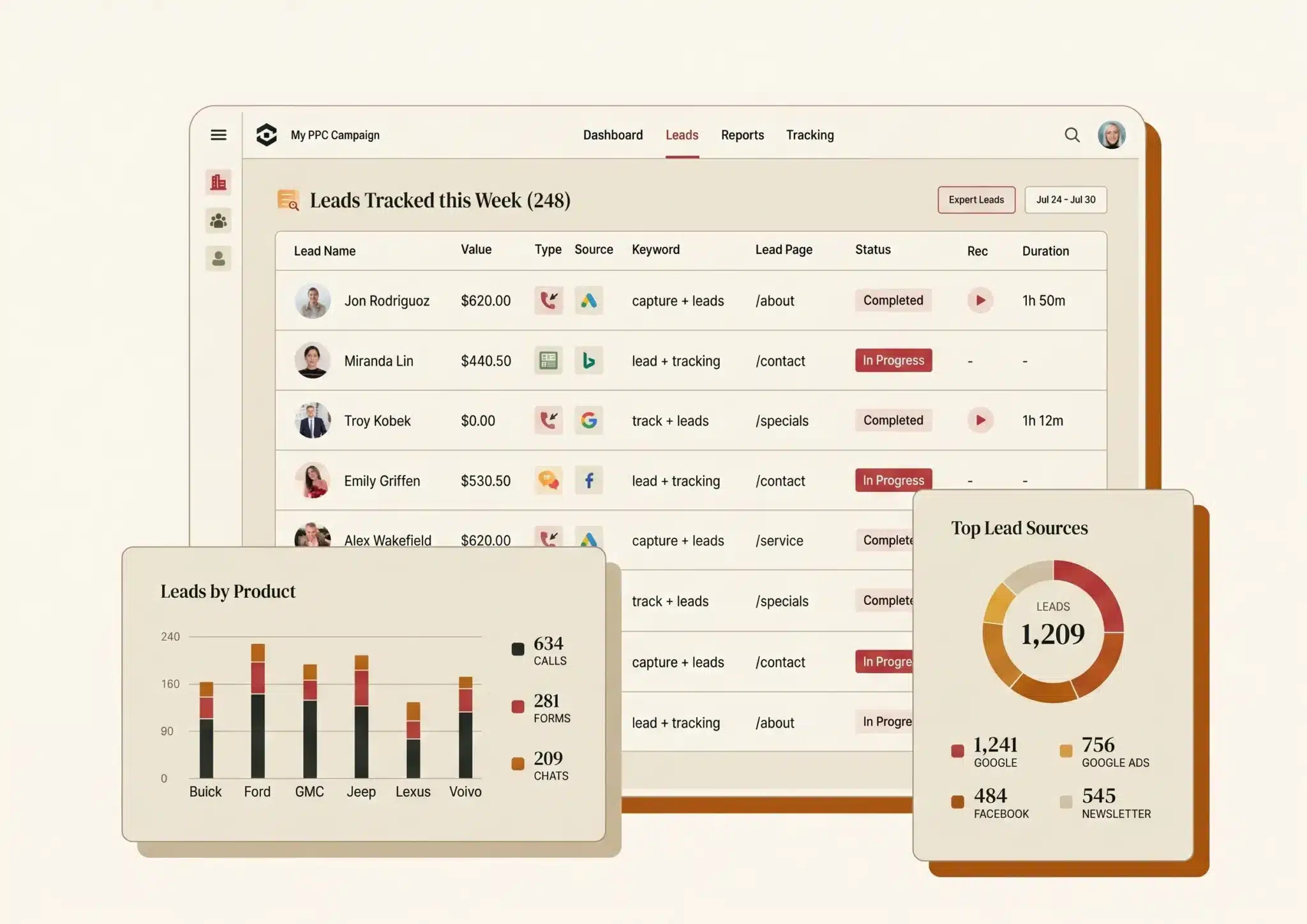
The monthly report tracks cost per signed case by practice area and source. Source, metro, and ad campaign all break out underneath. Impressions and clicks live in the appendix because impressions and clicks have never paid an associate. Every asset the engagement produces lives in the firm’s name: the WordPress install on the firm’s hosting, the domain registered to the firm, the Google Ads MCC linked to the firm’s account. Month-to-month after the first ninety days, because if a vendor needs to lock you in to keep you, the work is not good enough on its own.

Cost per signed case Full asset ownership Month-to-month
Step 05From day one
Rankings tell you a page exists.
Signed cases tell you it works.
Jorge Argota · Founder · 10 years in
· Ready for the math?

Tell me your practice area and metro. I will tell you if the math works.

Step one is a written feasibility report you keep, regardless of whether the engagement moves forward. Sent back inside 72 hours, with the five inputs run against your actual market.

Request the report Free · 72 hour turnaround · No retainer required
· Step 03 in practice · What gets shipped

Every page cites the rule that decides the case.

Most law firm content reads like the firm read three competing pages and rewrote the average. AI search ignores it. Lawyers ignore it. Below is what an Argota practice page surfaces instead, written so a Perplexity or ChatGPT answer can pull from it directly.

Sample · med mal · FL
Practice page block · Florida medical malpractice

When can I file a Florida medical malpractice case?

Fla. Stat. § 95.11(4)(b)

In Florida, an action for medical malpractice must generally be commenced within two years from the time the incident giving rise to the action was discovered, or within two years of when it should have been discovered with reasonable diligence, but in no event more than four years from the date of the incident. The window narrows in claims involving fraud, concealment, or intentional misrepresentation of fact.

Why this works. The page names the statute, the limit, the discovery rule, and the exceptions, in language an AI model can lift verbatim. A vague version of the same paragraph sits on dozens of competing law firm sites and gets ignored by every retrieval system that matters.

  • Citation Statute number and subsection
  • Rule Time limit, discovery rule, fraud exception
  • Format Direct-answer paragraph for AI retrieval
· Step 03 detail · Florida is six markets

Six metros. Six content strategies.

Cost per click in Miami runs three to four times what it runs in Tampa for the same keyword. Hialeah intake is Cuban Spanish. Doral is Venezuelan. Jacksonville’s case mix is commercial trucking. Orlando is tourism injury. A single Florida content strategy loses to six metro strategies every time.

Metro
What the content does differently
CPC band
Miami
Bilingual default. Brickell and Coral Gables professional content alongside Hialeah and Little Havana intake architecture. Highest competitive density.
$300+
Hialeah
Cuban Spanish dialect required for intake and content. Local Service Ads still has open inventory in some practice areas.
$200+
Kendall
Venezuelan and Colombian Spanish mix. Map Pack still ranking opportunities, where Flores Law hit number one inside five months.
$150+
Orlando
Tourist accident profile dominates. Theme park premises, rental car liability, and out-of-state plaintiff dynamics drive different content angles entirely.
$140+
Tampa
Gulf Coast economics. CPC sits near $100 on terms that cost $300 in Miami. Lower billboard density. Different referral dynamics in Hillsborough courts.
$100+
Jacksonville
Commercial trucking heavy. North Florida case values and jury pools differ materially from South Florida. Insurance claim profile is its own content track.
$110+
· Step 04 detail · Where most budget dies

Forty-seven hours vs. five minutes.

The average law firm takes 47 hours to return a new intake call. By that time, the lead has already retained somebody else. Marketing cannot survive that gap, no matter how good the campaigns are. So intake gets fixed before the first ad runs.

Industry intake speed · what fixes it Step 04 · before any ad spend

Industry: 47 hours to call back. Argota target: under 5 minutes.

Responding to a new lead inside five minutes lifts qualification odds dramatically over the industry average. Most firms cannot hit that on their own because their script, their phone routing, and their CRM were all set up separately, by different people, in different years. Step 04 fixes all three before any ad money gets spent on driving leads to the same broken pipe.

3fixes Script audit · instant response systems · lost lead autopsy
  • Script audit Last 90 days of intake calls scored against a rubric. Rewrite around what closes, not what sounds professional.
  • Instant response SMS autoresponder inside 30 seconds. Ringless voicemail at two minutes. Callback queued in the CRM.
  • Lost lead autopsy Every lost lead categorized by root cause in the monthly report. Patterns get fixed, not just measured.
Step 04 · intake before leads Done in weeks 6 to 12

The 47-hour industry average is widely cited in legal marketing research; specific firm results depend on intake setup, market, and case mix.

· Step 05 detail · What you actually own

Three layers of ownership.

Most agencies hold one or more of these on your behalf. When the engagement ends, the firm finds out which ones, and what it costs to get them back. The Argota build is structured so the answer is always the same: everything stays in the firm’s name from day one.

Layer 01 · Infrastructure
Domain & hosting
in your name, on your account
  • Domain registered to the firm, not the agency
  • WordPress on your hosting account
  • No proprietary CMS, no platform tax
  • Walk away with one DNS update

What this prevents: Agencies that hold the registrar and quote a rebuild cost when you ask to leave.

Set up in week one

Layer 03 · Content & tracking
Pages & data
stays on your CMS, in your name
  • Every page, post, and asset in your CMS
  • Tracking spine and call recordings exportable
  • Schema and structured data version-controlled
  • No rented-back content, no portfolio claims

What this prevents: Agencies pulling pages back as portfolio examples or rewriting history if the engagement ends badly.

Built across weeks 3 to 12

Month-to-month after the first ninety days. No long-term contract, no auto-renewal clause that runs without active acceptance. The engagement renews because the work earns it. If a vendor needs to lock you in to keep you, the work is not good enough on its own.

· Why this is different

What this process refuses to do.

Five things every other agency process page does differently from this one. Each one is the reason a firm signs and the reason a firm later regrets it.

01

No retainer if the math does not work.

Roughly a third of inbound firms hear no on the first call. A consolation strategy document is worse than a clean refusal, because it bills against a number that was never going to produce signed cases. The feasibility check exists to make that call before any contract gets signed.

02

Intake gets fixed before leads arrive.

Almost every other agency hands leads off and assumes the firm will catch them. Most firms do not. The 47-hour industry average is what kills marketing budgets, and no campaign optimization survives it. Step 04 sits before paid media for that reason.

03

Statute citations, not template copy.

Florida statutes get named on the page in the language the law uses. A generic “you have a limited time to file” sentence loses to a Fla. Stat. § 95.11 citation in every retrieval system AI search runs on. The cost of writing it correctly is the same. The cost of writing it generically is invisible until the rankings show up flat at month nine.

04

One firm per practice area per metro.

Agencies that sign every firm in a market deliver the same playbook to all of them and call the result “best practices.” A roster cap of fifty firms total, with one firm per practice area per metro, is the structural reason the work compounds for the firms inside instead of cancelling out across competitors.

05

Month-to-month after ninety days.

Long contracts are how agencies hedge against their own performance. The roster cap, metro exclusivity, and ownership structure make the math work without that hedge. If the engagement stops being valuable, the firm walks with everything it paid for.

· Section 03 · Roster status

The roster cap is the product.

A national roster of 50 firms, with one firm per practice area per metro. When a slot is taken, no other firm in that market gets the same playbook. This is why the work compounds for the firms inside, and why most metros are not on the table at all.

44 of 50 spots open

Most U.S. metros · PI, immigration, criminal, family, business

First qualifying firm wins per practice area per metro. Slot locks once the audit confirms the unit economics will produce signed cases at a profitable cost.

  • One firm per practice area per metro, plus a 90-day tail
  • Free feasibility check before any commitment
  • Slot locks the moment the math pencils out and you sign
Closed statewide

Florida medical malpractice

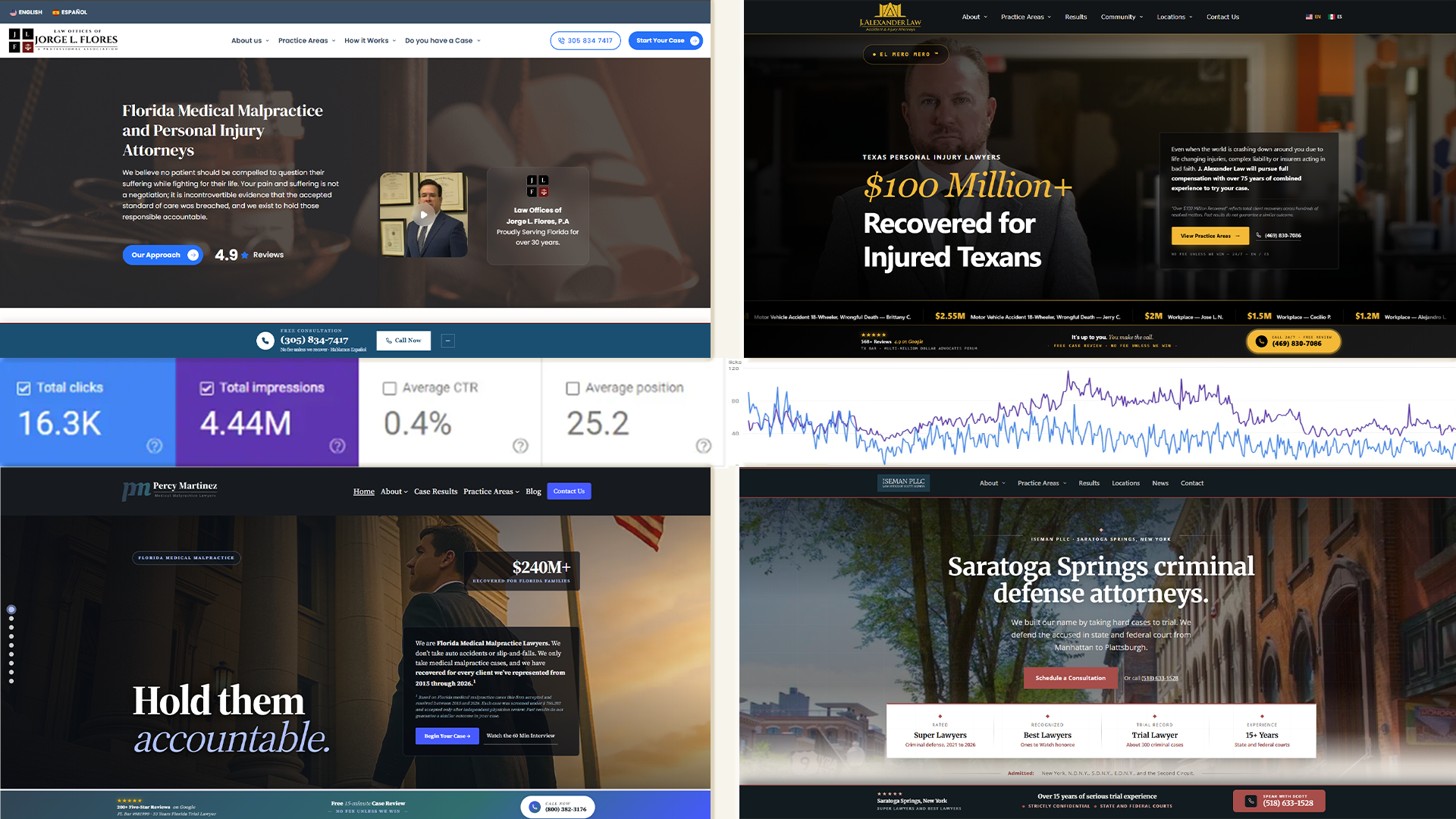
Locked statewide by Percy Martinez P.A. and Jorge L. Flores P.A. for over a decade. No other Florida med mal firm will be accepted into the roster.

  • Miami, FL · Percy Martinez P.A.
  • Kendall, FL · Jorge L. Flores P.A.
  • Tampa, Orlando, Jacksonville, Port St. Lucie all locked

A metro locks the moment a qualifying firm signs and the audit confirms the economics, intake, and competitive position make sense. No waitlist. No second slot. No exceptions. Once locked, the market is off the table for your competitors permanently.

Claim your slot
· Section 04 · Common questions

Before you book.

Six questions firms tend to ask before signing on. If yours is not here, just call me at 941 626 9198. I answer most calls.

You get a written explanation of why the math did not work and what would need to change for it to work later. No retainer, no consolation strategy document, no upsell. Sometimes the answer is to come back when intake speed is fixed. Sometimes it is that the market is saturated for any agency at the current budget. You hear which one.

Early signed cases usually show up in the first sixty to ninety days from Local Service Ads and brand PPC launched in phase three of the rollout. Organic search and AI citation take six to twelve months to compound. The tracking spine is live from week one, so cost per signed case is visible from the first retainer rather than averaged later.

They usually do at first. Intake fixes threaten the way intake teams have always done things. The approach is to share recorded calls and let the team hear their own conversations. The data makes the case on its own. Firms that refuse to fix intake at this stage usually end the engagement inside ninety days because the math we both agreed on will not hit. That is why the feasibility check in step one specifically flags intake problems.

Yes, spelled out in the engagement contract. The WordPress install goes on your hosting. The domain is registered to your firm. The Google Ads account MCC is linked to yours. Every piece of content produced transfers to you on engagement end. No proprietary platform lock-in. No rented-back content. No transfer fees.

No. One firm per practice area per metro. If you are a PI firm in Miami and you sign with me, no other Miami PI firm is on the roster while you are active, plus a ninety-day tail period after engagement ends. This is why the roster stays small.

Strategy, tracking architecture, intake audits, and client-facing work are Jorge personally. For execution on production tasks like development, content drafts, and Spanish transcreation, there is a small bench of specialists who have worked with the firm for years. Clients are not on a rotation of junior account managers.

· Step one

Tell me your practice area
and your metro.

If the math works, you hear the monthly floor and the projected cost per signed case at your scale. If it does not, you hear that, with no retainer-light and no consolation deck.

  • Free feasibility report. Returned within 72 hours. The five inputs run against your actual market, with a written verdict on whether marketing will produce signed cases at a profitable cost.
  • Proposal review. If another agency has already given you a quote, send it over. I will tell you in writing whether the scope, timeline, and price line up with what the work actually involves.
  • Strategy call. Thirty minutes on the phone with me, in English or Spanish, talking through the firm’s situation before either of us commits to anything.

Free feasibility report · 72 hour turnaround · One firm per practice area per metro · Client-owned assets at engagement end