






TL;DR
Google’s AI search cites Justia, FindLaw, and Best Lawyers as “authoritative sources” when recommending attorneys. Those same directories charge $4,000 to $13,000 per month for premium placement. The AI presents paid listings as organic recommendations. Meanwhile 93% of AI Mode searches end without a click, so the leads from all of this are abysmal to none. Paid media on your own properties is the better bet right now.
So I was looking at what happens when someone searches “best medical malpractice lawyers in Miami” using Google’s AI Mode and I pulled it up on my screen and just sat there for maybe five minutes because what I was looking at was essentially a pay-to-win system dressed up as an objective recommendation, and Google’s AI is pulling names and credentials directly from paid legal directories and presenting them to the user as if this is some kind of curated expert answer when really it’s just repackaging information from platforms where attorneys pay thousands of dollars a month to appear at the top.
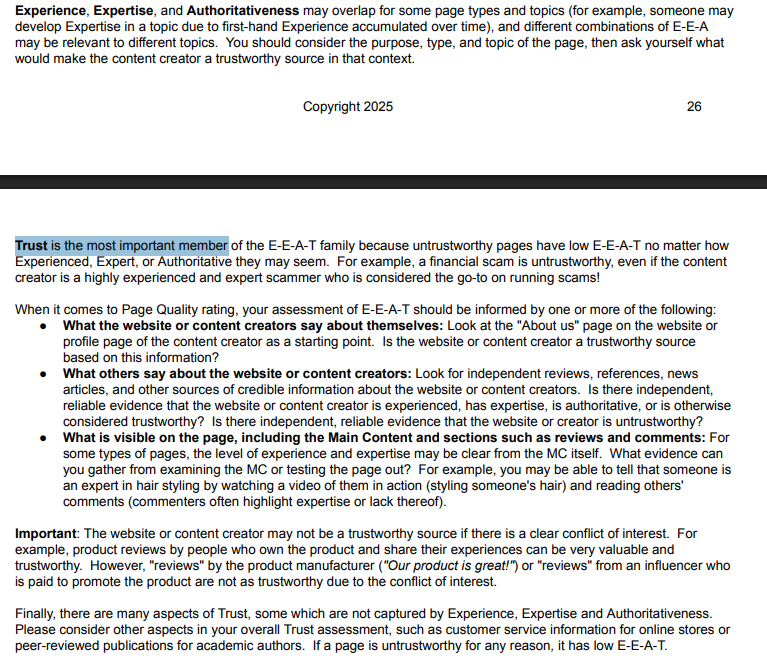
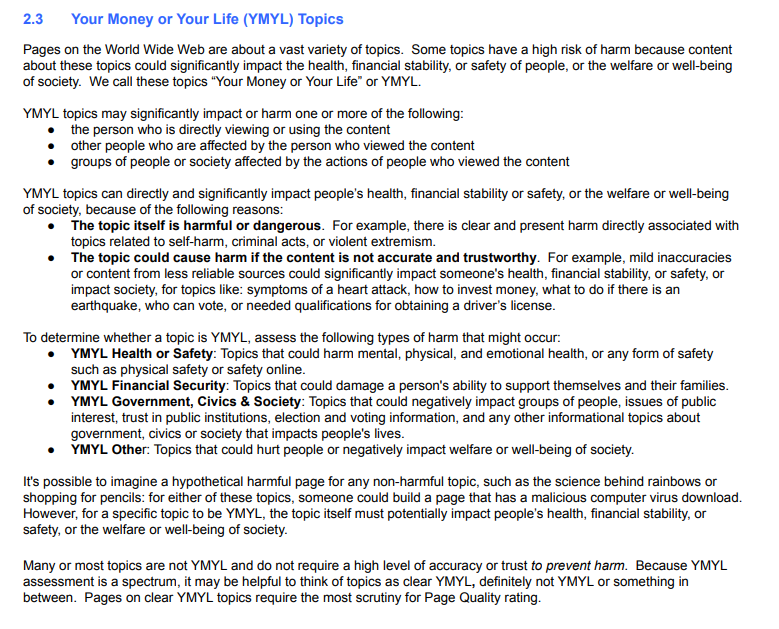
And the person searching has no idea that the “recommendation” they’re reading is sourced from a paid placement on Justia or a sponsored listing on FindLaw or a Super Lawyers designation that costs money to maintain, and I keep thinking about how Google’s own Search Quality Rater Guidelines talk about E-E-A-T and reliability and “Your Money or Your Life” content needing the highest quality standards, but the AI is just pulling from directories where position is literally purchased and nobody in the room seems to think that’s a problem, which I still don’t fully understand.
61%
Drop in organic CTR when AI Overviews appear
Seer Interactive, Sept 2025
68%
Drop in paid CTR when AI Overviews appear
Seer Interactive, Sept 2025
93%
AI Mode searches that end with zero clicks
Semrush, Sept 2025
83%
Zero-click rate on searches with AI Overviews
Similarweb, 2025
WHAT GOOGLE’S AI IS ACTUALLY SHOWING PEOPLE
I took screenshots of the actual results because I think you need to see this to understand what’s happening and why it matters for where you put your marketing dollars.
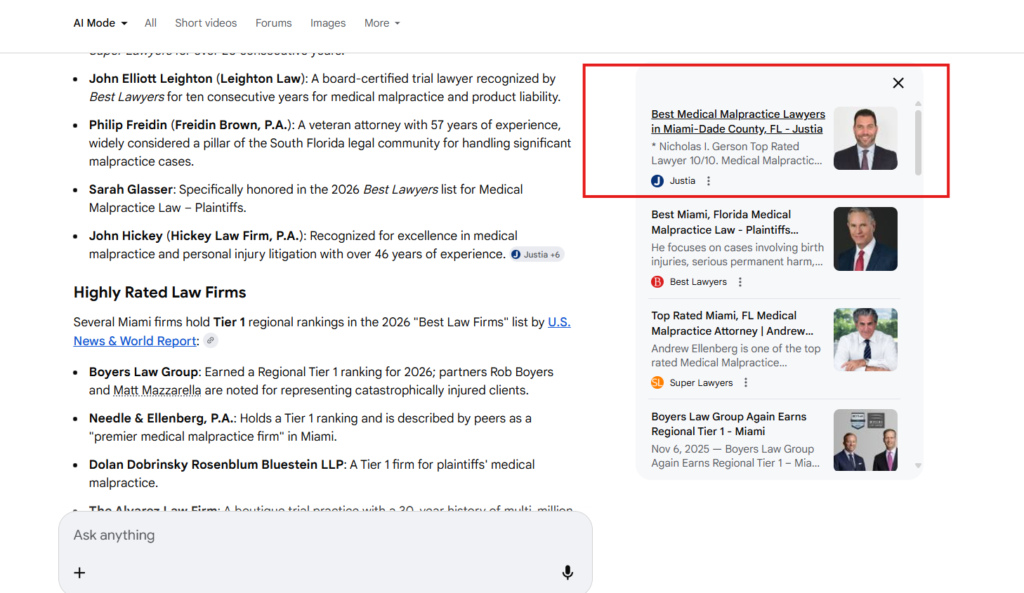
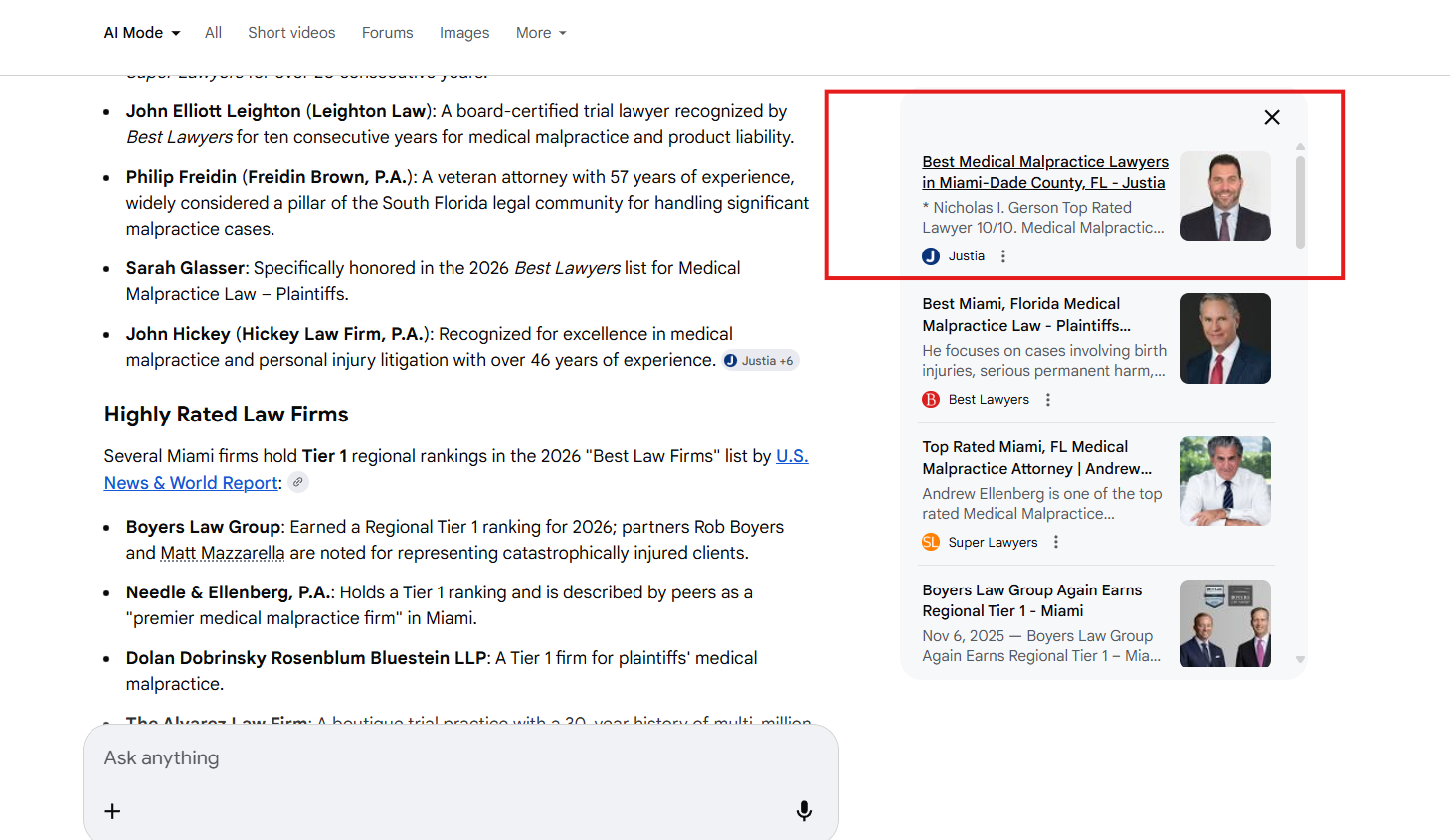
Look at what’s happening in that screenshot; Google’s AI is writing a narrative that says “several Miami firms hold Tier 1 regional rankings” and it’s naming Boyers Law Group and Needle and Ellenberg and Dolan Dobrinsky Rosenblum Bluestein, and on the right side it’s showing the source cards from Justia and Best Lawyers and Super Lawyers, and those directories are the paid platforms where attorneys spend thousands to maintain their listings.
Attorney pays
directory $$$
→
Gets “Premium”
placement
→
Google AI cites
directory as source
→
User sees “recommendation”
never clicks through
And the part that really gets me is the sidebar; you can see the Justia card that says “Best Medical Malpractice Lawyers in Miami-Dade County” and the Best Lawyers card and the Super Lawyers card, and these are the sources Google’s AI is citing to build its recommendation, and every single one of those platforms has a paid tier where attorneys can pay for premium placement, which means the AI recommendation is downstream from paid directory positioning and the person searching has no way of knowing that.
THE JUSTIA PAGE GOOGLE IS CITING
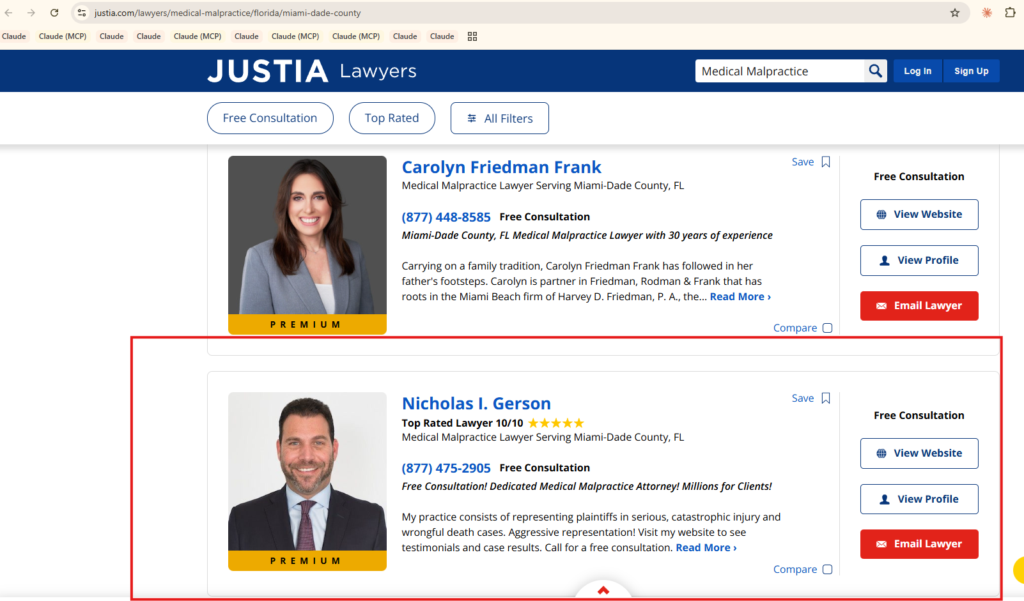
And this is the actual Justia page that Google’s AI is pulling from; you can see the word “PREMIUM” stamped right there on the listing in blue block letters, and Carolyn Friedman Frank is the first result and Nicholas Gerson is the second result and both of them have that PREMIUM badge which means they’re paying for placement, and this is the page that Google’s AI is treating as a source for its recommendation of who the “best” medical malpractice lawyers in Miami are.
What it looks like
Google’s AI objectively identifies the “best” attorneys based on merit, credentials, and peer review.
What’s actually happening
The AI cites directories where ranking position is purchased. Platinum placement on Justia costs $4,500 to $9,900 per year per metro.
What it looks like
The “Top Rated 10/10” badge signals verified quality that the AI recognized and elevated.
What’s actually happening
Ratings on paid directory profiles exist within a system where visibility itself is purchased. The AI can’t distinguish earned from paid signals.
What it looks like
Being featured in the AI answer drives significant new client inquiries to your firm.
What’s actually happening
93% of AI Mode searches end without a click. The user reads the AI summary and never visits the directory or your website.
THE ACTUAL COST BREAKDOWN
So I pulled up both proposals side by side and the combined number is honestly worse than I expected, and I’ve been in this industry for 10 years so my expectations are already pretty low which is saying something.
FindLaw / Thomson Reuters — Medical Malpractice TopSpots
Miami TopSpot (1 left)
$790/mo
Tampa/St. Pete TopSpot
$4,270/mo
Orlando TopSpot (1 left)
$2,500/mo
Jacksonville TopSpot
$2,400/mo
Abogado.com — 4 metros
$2,288/mo
LawInfo — 4 metros
$1,160/mo
List Price Total
$13,408/mo ($160,899/yr)
$13,408/month list price
→
$6,811/month “January Bundle Discount”
Still $81,740/year for rotating directory ads you don’t own.
Justia — Platinum Placements (Annual)
Jacksonville, FL Metro
$4,518/yr
Orlando, FL Metro
$6,279/yr
Tampa-St. Petersburg, FL Metro
$9,914/yr
Annual Total
$20,712/yr
$102,452
Combined annual spend on directory placements (FindLaw bundle + Justia Platinum) across four Florida metros. None of it builds equity. All of it disappears when you stop paying.
And the whole thing creates this circular economy where directories sell visibility to attorneys and Google’s AI validates that visibility by citing the directories as authoritative sources and the attorney thinks they’re getting organic recommendations when they’re really getting amplified paid placements, and I spent 10 years at Percy Martinez watching this industry work and this is maybe the most backwards thing I’ve seen so far which is saying a lot.
GOOGLE’S OWN RULES SAY THIS SHOULDN’T WORK
The Disconnect
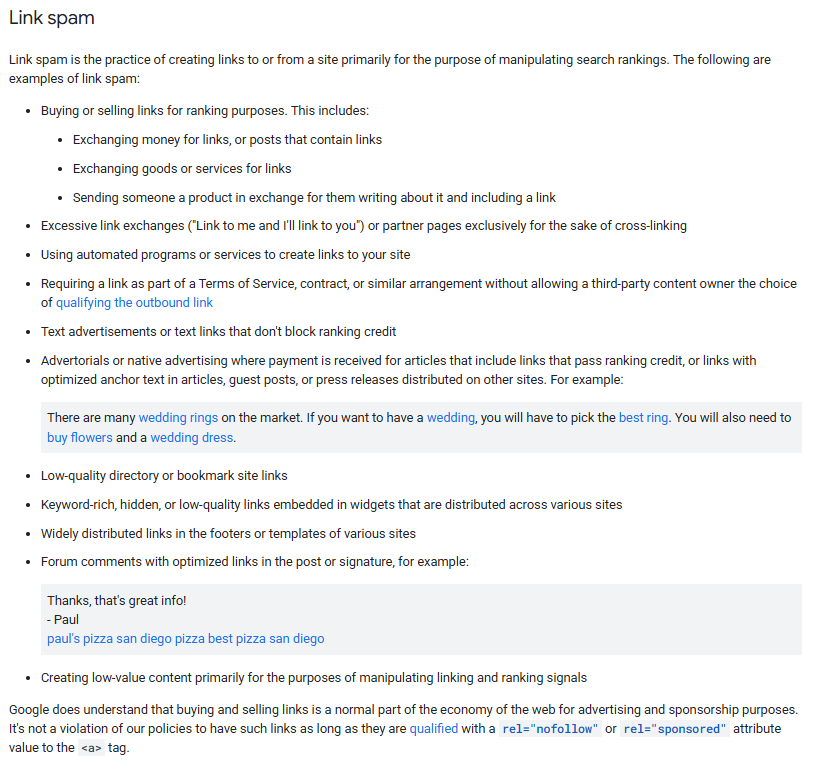
Google uses 16,000 Search Quality Raters worldwide to evaluate content based on E-E-A-T: Experience, Expertise, Authoritativeness, and Trustworthiness. Legal services are classified as YMYL (Your Money or Your Life) requiring the highest quality standards. Yet their AI cites paid directory pages; where ranking is determined by payment; as authoritative sources for life altering legal decisions.
And the guidelines say that ratings should not be based on personal opinions or preferences but on how well the page achieves its purpose and how useful the result is for the person searching, and the raters are supposed to assess whether content is accurate and trustworthy for information-seeking queries, but the AI is pulling attorney recommendations from directories where the primary ranking signal is payment not quality, and I keep coming back to this because it feels like there are two different Googles; one that publishes these thoughtful guidelines about quality and trust, and another that builds an AI system that cites paid directories as authoritative sources, and the disconnect between those two is something I think about probably more than I should.
THE NUMBERS ARE BRUTAL FOR PAID DIRECTORIES
“You’re paying $6,800 a month to appear in a directory that Google’s AI is citing as a source, but the person reading that AI answer never actually clicks through because the AI already gave them the information they needed.”
And Bain and Company research found that 60 percent of Google searches now end without any click at all, while the data on AI Mode specifically is even worse at 93 percent zero-click. And paid search cost per click has hit a six-year high while click-through rates keep declining, which means advertisers are spending more to reach fewer people and the people they are reaching already have their shortlist.
Quick Math
$102,452/year in directory spend. Average medical malpractice settlement fee to firm: ~$83,000 to $250,000. You need 1 to 2 cases signed directly from directories annually just to break even — and most firms can’t actually track that number because the attribution is muddled by the directory sitting between you and the client.
So the whole model of paying for directory visibility is getting squeezed from both sides; the cost keeps going up and the clicks keep going down and the AI is extracting the value from the directory content without sending the traffic back, and independent publishers filed complaints with regulators alleging traffic declines of 34.5 percent or more from AI Overviews, and the UK’s Competition and Markets Authority is actually proposing rules requiring Google to let publishers opt out without losing visibility, which tells you this isn’t just an attorney problem; it’s everyone whose content Google’s AI is consuming without returning the traffic.
Honest moment from Jorge
I don’t want to pretend I have every answer on this because the AI search landscape is changing faster than anyone can map it. But what I do know from 10 years at Percy Martinez is that every dollar we put into assets we owned compounded over time and every dollar we put into rented visibility disappeared the moment we stopped paying. That math hasn’t changed even though search has.
WHERE THE MONEY SHOULD ACTUALLY GO
Renting Directory Visibility
$102,452/year paid indefinitely just to maintain your current position in four Florida metros
Zero owned assets the moment you stop paying; your listing, reviews, and profile vanish overnight
Google AI extracts your listing data and presents it directly to the user without sending any clicks back
Attribution is muddled because the directory sits between you and the client; can’t trace spend to signed cases
Position determined entirely by payment tier, not case results, client reviews, or actual courtroom wins
No compounding effect; year five costs the same as year one and delivers the same declining returns
The directory controls your profile, your reviews display, and your ranking; you’re a tenant on their platform
After 5 years: $512,260 spent with nothing permanent to show for it and no competitive moat built
Building Owned Media
Same $102K redirected into your own website, SEO content, Google Ads, and Local Service Ads you control
Organic traffic compounds every month you publish; each page becomes a permanent lead-generating asset
76% of AI Overview citations come from pages already ranking in Google’s top 10; your content gets cited directly
Your own properties get cited by the AI, not a middleman directory that’s extracting your credibility for profit
Brands cited by AI see 35% more organic clicks and 91% more paid clicks across all related search queries
Cost per lead decreases over time as domain authority grows; the opposite trajectory of directory spending
You control every word, every page, every conversion path, and every piece of attribution data from click to case
After 5 years: a permanent digital property generating leads with a competitive moat no one can outspend
The firms I’d be talking to right now about reallocating budget would be thinking about a few things; your own website content is still the foundation because over 76 percent of AI Overview citations come from pages already ranking in Google’s top 10, so the AI is still pulling from websites with strong organic presence, and if your firm has deep experience-based content about medical malpractice in specific Florida metros that content has a real chance of being cited directly by the AI without paying a directory to be the middleman.
What AI Systems Actually Want to Cite
Content combining text, images, and video with structured data shows 156% higher AI citation rates versus text-only pages. First hand experience content with specific details and practical insights gets prioritized over generic research based content. AI systems can detect these markers. Your own case results page with real outcomes beats a directory listing every time.
And paid media in the traditional sense; Google Ads, Local Service Ads, targeted campaigns where people are actually making decisions, that’s still the most direct path to signed cases right now because at least with paid ads you control the targeting and the landing page and you can track from click to consultation to signed case, and the attribution isn’t muddled by a directory sitting in the middle claiming credit for leads that might have found you anyway. At Percy we competed against billboard firms spending $50,000 a month on TV and we started with a $500 budget and we won on digital because we tracked everything to signed cases not dashboards.
And the other thing nobody talks about is that AI systems increasingly favor recognizable brands with consistent messaging and strong reputation signals, which means the firms that invest in their own brand through PR and content and genuine client reviews on their Google Business Profile are building the kind of authority that AI wants to cite regardless of directory payments. Once an AI system starts citing your brand it tends to keep citing you across related queries, which means early movers who build real authority now will have an advantage that late movers literally cannot buy their way into, and I think that’s probably the most important thing in this entire post even though it ended up near the bottom which is maybe not ideal but that’s how it came out.
“The gap between paid placement and earned reputation is shrinking every time Google updates its AI. The firms investing in owned authority now will have compounding advantages that directory spending can never match.”
Want to know what your directory spend could build instead?
I’ll pull your numbers, compare what you’re paying to what that same budget would build in owned assets over 12 to 24 months, and if the directories genuinely make sense for your firm I’ll tell you that because I’d rather lose the work than watch you spend six figures on something that doesn’t trace back to signed cases.