

 Argota Marketing · Irvine market analysis
Personal Injury Lawyer Marketing in Irvine: a signed case architecture.
For Irvine personal injury partners who want signed cases, not traffic reports. We are based in Florida, but we reverse engineered the Irvine market: who advertises here, what the clicks cost, and how one of the priciest injury markets in the country shapes the math. The method was proven inside a Florida practice that went up against Morgan & Morgan on a fraction of the spend, and it runs on the only number that matters, cost per signed case. Here is what it takes to win in Irvine.
One firm per metro, capped at 50 nationally. Measured in signed cases, not clicks.
No guaranteed outcomes. Advertising rules vary by state; bar rules reviewed before launch.
What is personal injury lawyer marketing?
In Irvine, personal injury marketing is the system that turns a person hurt where the I-405 meets the I-5 or struck near the Irvine Spectrum into a signed client: getting found, the ad, a page that converts, and an intake that answers fast. It is its own discipline because the demand is urgent and the clicks are dear, so response speed beats ad creative. The only score that counts is cost per signed case by case type and source, not leads or traffic.
The usual channels are here too: SEO and Google Business Profile, Local Service Ads and Google Ads, reviews, content, referrals, and intake. In a market like Irvine, each one is still judged on the same thing: cost per signed case, not clicks.
The Signed Case Growth System.
Most agencies pick channels before they understand the market. In one of the most expensive click markets anywhere, a sloppy bid burns cash fast, and missing that wastes budget. We start with where Irvine is getting hurt, the math, and intake. Five phases, one number they all answer to.
Google PartnerGoogle Ads certifiedMap the market
Before a dollar moves, we map Irvine by intent, urgent hire now versus research, and by where the serious cases concentrate across Orange County. Then we take the clusters the big advertisers spread thin across: the I-405 and I-5 convergence, the SR-241 and SR-133 connectors, the long fast arterials like Jamboree Road, Culver Drive, and Alton Parkway, and the pedestrian and bicycle cases around the Irvine Spectrum and UC Irvine. The goal is to own the clusters, not fight the broad term.
The read: map the freeway convergence and arterial clusters before naming a channel.
Fix the math
Clicks do not pay an Irvine firm and neither do leads. Signed cases do. We make cost per signed case the KPI and split it by case type, because the price gap between a routine rear end and a truck or catastrophic case is wide, and in Irvine the click prices make that gap punishing. A blended average hides which one signs. Every unsigned case gets a lost reason logged, so a busy phone that never closes cannot pass for a working campaign.
The pricing: price each case type on what it costs to sign, not what the broad term costs to click.
Build the channels
In a high cost market the channels have to stack, not run as three projects. Organic and the Google Business Profile build authority that compounds along the I-405 and Jamboree corridors, paid search and Local Service Ads catch the urgent crash searches near the convergence and the Spectrum, the site converts, and the content is written so AI answers cite the firm rather than summarize past it. One dashboard, not three reports.
The stack: build the corridor authority first, then let paid catch the urgent searches.
Stop the leaks
When results stall, spending more just widens the leak. Find the one constraint instead: no traffic is a visibility problem, traffic without leads is a conversion problem, leads that do not sign is an intake problem. California shapes the work two ways: it is a pure comparative fault state, so a victim can recover even when mostly to blame, with the award reduced by their share, and the two year filing clock is shorter than many states. Intake has to read the fault picture and the clock early.
The constraint: fix the leak, and the two year California filing clock, before adding budget.
Prove it
An Irvine firm should not take the agency on faith. It should see what was built, what it owns, and what signed. Everything ties back to signed retainers on assets the firm holds outright, the site, the ad accounts, the tracking, and the content, and every campaign clears the California Rules of Professional Conduct on lawyer advertising before it runs. If the partnership ends, the firm keeps all of it.
The ownership: the firm owns every asset, and every campaign clears the California rules before launch.
Why PI marketing is different from other law firm marketing.
Three forces set personal injury apart, and each one changes how an Irvine firm should spend and where it can win against a bigger budget.
Urgency
People look for a lawyer in the hours after a wreck, usually on a phone, and they sign with whoever earns trust first. The window is short, and on the congested I-405 and I-5 the firm that documents the scene and answers first protects the claim. That is why intake speed beats ad polish.
Economics
Injury clicks are among the priciest categories in all of search, and California carries some of the highest injury click costs in the country, with Orange County among the most expensive. One signed case can carry tens or hundreds of thousands in fees, so cost per signed case, not cost per click, is the only honest way to bid here.
Competition
The broad searches are dominated by heavy advertisers like Wilshire Law Firm, BD&J, and Morgan & Morgan, with budgets a smaller firm cannot match head on. The win is focus and speed: own the I-405 and I-5 truck cases, the Jamboree and Culver corridors, and the Irvine Spectrum pedestrian cases the giants do not work as hard, and answer faster.
Built by someone who sat in on the intake calls.
Most agencies have never priced a case.
The marketing here was built from the inside of a practice that started with a solo attorney and a $500 budget, competing against billboard firms spending fifty thousand a month on television. That is where the method came from, and the results below are documented, not promised.
What actually makes this different
We track to signed cases, not dashboards. Vanity metrics like traffic and impressions do not pay a firm; signed cases do, and every dollar has to trace back to one. The firm owns everything, the domain, the website, the ad accounts, the content, and the data, so there is no vendor lock in and nothing to lose if the engagement ends. One firm per practice area per metro, capped at 50 nationally, so no two clients ever compete on our work. And it is an anti sell: if the math does not work for a firm, that gets said out loud, including ranking above Morgan & Morgan in Hialeah Local Service Ads as proof the focused approach beats raw budget.
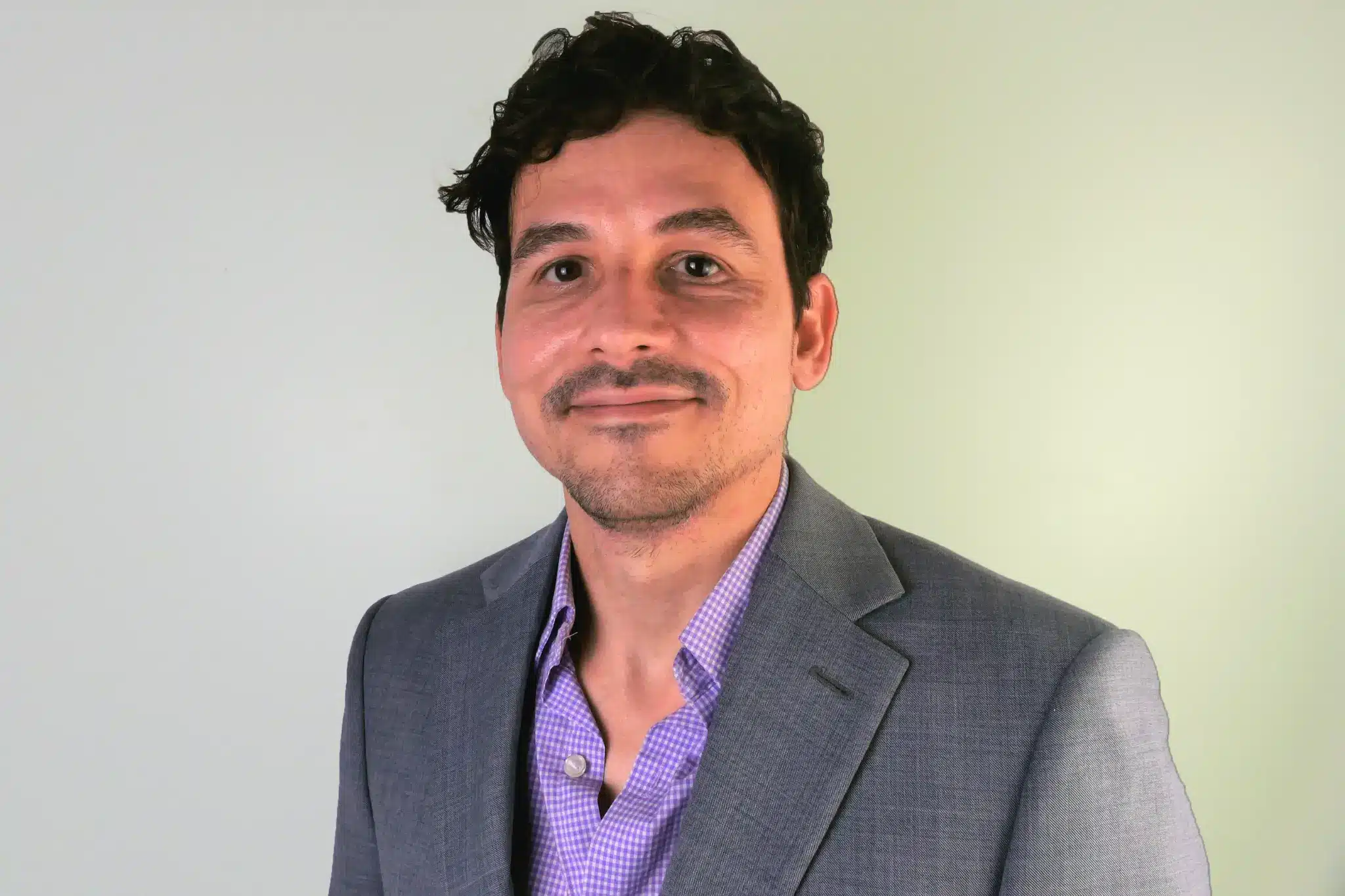
Jorge Argota
Ten years inside Percy Martinez P.A., first handling medical malpractice intake calls, then building the firm’s marketing from a $500 budget. University of Miami BBA. Google Ads certified. Bilingual, native Spanish.
The paralegal background is the difference: it means understanding case valuation, intake conversion, and the real economics of a firm, so the recommendation has to make mathematical sense or it does not get made.
Documented results at Percy Martinez P.A. Past results do not guarantee future outcomes. See the full case study →
The signed case math.
Every other number is an input. The one that pays a Irvine firm is what it costs to sign a single case, never a blended average that buries the best and worst channels in one figure.
- Cost per click and cost per lead are inputs; cost per signed case is the KPI. A representative $200,000 case generating about $66,000 in fees that costs $9,000 to acquire is a fourteen cents on the dollar buy. Hold the account to that ratio.
- Track by source and case type. A rear end on Culver Drive and a truck case on the I-405 are different products; averaging them into one number lies in both directions.
- Log a lost reason on every case that does not sign. That is how you catch the campaign that fills the phone with calls that never become retainers.
Competitive personal injury markets.
Irvine is its own kind of market: one of the largest master planned cities in the country, with long fast arterials and the I-405 and I-5 converging at its edge. Cases run through the Orange County Superior Court, and California, a pure comparative fault state, gives two years to file. Where a market lands in the tiers below decides the rest.
| Tier | What makes it hard | How strategy changes |
|---|---|---|
| Tier 1 Brand + cost | A few firms already own the attention, and clicks cost enough to punish slow intake or a scattershot target. The classic Tier 1 metros are the coastal giants like New York, Los Angeles, Miami, and Houston, and affluent Orange County markets like Irvine sit close behind, subject to checking current CPC, LSA, and branded demand data. | You defend the brand, slice the targeting down to case type, answer faster, and hold the budget tight, all at the same time. |
| Tier 2 One or the other | One pressure is real but not both: either a dominant brand or steep clicks, not the two together. Irvine leans toward the steep click side, with several large advertisers present. | Compound the local SEO, lean into Google Business Profile and Local Service Ads, and take the corridors and case types the dominant brands leave alone. |
| Tier 3 Open | Smaller metros where buyers are not trained to one brand and there is room to build topical and local authority early. | Grow through narrow case type pages, long tail clusters, and local proof before a better funded firm consolidates the market. |
How the channels run in Irvine.
SEO & local
- Separate pages for freeway truck and catastrophic cases, not one broad page
- Corridor pages for the I-405 and I-5, Jamboree Road, and Culver Drive, never a swapped name
- Content built around the convergence and Spectrum cases intake actually fields
Google Business Profile & reviews
- Correct categories and services so the profile is eligible
- Steady review velocity with a reply on every review
- A simple posts and Q&A cadence that answers real questions
Google Ads & Local Service Ads
- LSAs can help generate early case opportunities in the right markets; paid search captures high intent
- Segment by case type, because values differ wildly
- Send every click to a matched page, never the home page
Intake & conversion
- A five minute response target; in PI, speed to lead heavily affects conversion
- Case type forms with routing to the right person
- After hours capture and missed call recovery
What our clients say.
The system we are bringing to Irvine was built in South Florida, one of the most expensive personal injury markets in the country. These are the partners who run it: real, named clients, cross referenced to the platform each review was left on, with no paid placements.
Cross referenced on the platform listed on each card.
Google · LinkedInJorge rebuilt our Kendall Map Pack presence from nothing to number one in five months on a fraction of what the billboard firms in our market spend. The difference is he understood the cases. He had sat in on intake calls.
Our Spanish campaigns were hemorrhaging money with Google Translate copy. Jorge rebuilt them in proper Cuban for Hialeah and Venezuelan for Doral. Cost per lead dropped 50%, and the calls actually sign now.
Every other agency wanted monthly retainers for strategy. Jorge sent us a cost per signed case dashboard the first week. If the numbers did not work he said so. I had never had that conversation with a marketing person before.
Jorge rebuilt our Kendall Map Pack presence from nothing to number one in five months on a fraction of what the billboard firms in our market spend. The difference is he understood the cases. He had sat in on intake calls.
Our Spanish campaigns were hemorrhaging money with Google Translate copy. Jorge rebuilt them in proper Cuban for Hialeah and Venezuelan for Doral. Cost per lead dropped 50%, and the calls actually sign now.
Every other agency wanted monthly retainers for strategy. Jorge sent us a cost per signed case dashboard the first week. If the numbers did not work he said so. I had never had that conversation with a marketing person before.
Content for AI Overviews and people first search.
AI answers and classic search both reward content a model can lift and trust. Glossaries and checklists are easy for a system to compress and ignore; a real Irvine case teardown or original corridor data gives the firm a better shot at being cited. Publish the second kind.
Answer first structure
Lead each topic with a two to three sentence answer under a clear heading, so a model can lift it cleanly.
Entity rich language
Name the corridors, the convergence and the Spectrum, and the case types, paired with FAQ schema and a steady off site footprint.
Proof over definitions
Definitions earn the click; proof earns the citation, like a documented Florida program that produced 287 leads in five weeks and ranked above Morgan & Morgan on Local Service Ads.
What we show you before you spend.
Market & channel audit
Where the firm sits by tier and which channels can sign cases at the available budget.
Signed case dashboard spec
The exact fields that tie every channel to a signed retainer, on platforms the firm owns.
Intake leakage report
Where calls and leads are lost today, with the lost reason taxonomy to fix it.
Practice area & city map
The pages to build first, ranked by case value and competition.
Personal injury advertising rules.
Built for the California Bar
- Every Irvine campaign is built to the California Rules of Professional Conduct, Rules 7.1 through 7.5, and the advertising sections of the Business and Professions Code
- No ad contains a guarantee, warranty, or prediction of outcome, which California bars by rule and by statute
- Every ad names a California licensed lawyer responsible for it and discloses a bona fide office location, as the Business and Professions Code requires
- We do not use misleading awards or impersonations, and certain written ads are labeled advertisement
- We do not call the lawyer a specialist unless the State Bar of California certifies it
Why it is also strategy
- Injured Californians are wary of slick ads, so clean, compliant advertising builds trust
- Scaled, no value AI output can violate search spam policy
- A named person reviews published content for accuracy
- This is information, not legal advice; the California Rules of Professional Conduct govern
Start with the biggest leak.
Do not fix everything at once. Fix the one constraint. Find the symptom that matches your Irvine firm and start there.
No flat number on this page. The math depends on the market.
A single number on a national PI page would be a lie. The ranges below are where engagements typically land. The three questions under them are what every firm should ask the current agency before signing anywhere, including with us.
Strategy, content, and SEO. Ad spend is separate and managed transparently in the firm’s own accounts. Building the micro monopoly foundation: owning a suburb, a set of accident types, and the organic content that compounds over time. Many firms should expect six to twelve months before organic produces cases at scale, with early wins from Local Service Ads in the first 90 days.
Ad spend always separate. Always in accounts the firm owns.
The full system. Organic at scale across all case types, content built for AI search visibility, dedicated landing pages for every micro monopoly, and the tracking spine connecting every channel to signed retainers. Multi market coverage with metro specific strategy, bilingual where the market warrants, and quarterly cost per signed case reporting at the practice area level.
Ad spend always separate. Tracking spine included.
Three questions for the current agency before switching.
- What is my cost per signed case by case type for the last six months? If they cannot answer in numbers, they are reporting clicks and calling them cases.
- Do I own my website, my ad accounts, and my content? If any answer is no, the firm is renting its own marketing infrastructure and loses it the day the engagement ends.
- Show me the real links you have built in the last 90 days. If the answer is “proprietary network,” that usually means a private blog network that Google penalizes once it catches them. Ask to see the actual domains.
Common questions.
The questions Irvine PI owners ask most. Anything missing, call 941 626 9198.
Very. Heavy advertisers like Wilshire Law Firm, BD&J, and Morgan & Morgan compete, and California carries some of the highest click costs anywhere. The market is workable, but it rewards focus on the I-405 and I-5 truck cases, the Jamboree and Culver corridors, and Irvine Spectrum pedestrian cases over a head on fight for the broad term. Every channel is still judged on cost per signed case, not clicks.
Yes, on the clusters they spread thin across: the freeway convergence truck cases, the Jamboree and Culver corridors, and Irvine Spectrum pedestrian cases, each on its own page, plus faster intake. Run all channels on one dashboard and move budget to whichever signs cases cheapest.
Many firms should expect six to twelve months before organic produces signed cases at scale, with earlier movement on corridor and case type pages. It compounds, so commit to narrow pages tied to Irvine corridors and case types rather than chasing one broad term.
The better question is cost per signed case by case type, not a flat number. California click costs are among the highest anywhere, so budget should follow the case types and corridors where that math is healthy. Confirm the real Irvine click costs against your own account before you commit.
Yes. Every engagement is set up so you own the website, ad accounts, content, and tracking data from day one, and you keep all of it if we stop working together. That is the opposite of leased platform agencies, where the firm loses its marketing the day it stops paying.
Do not fight the broad Irvine term on volume against Wilshire and BD&J in year one, and do not scale paid before intake can answer fast. California click costs are punishing, so win the corridor clusters first and protect cost per signed case.
Find out where your Irvine signed cases leak, before you spend another dollar.
Irvine is currently an open market in our portfolio, and under our one firm per metro rule only one firm gets it. Send your practice mix, your case types, and what you spend now. We run the signed case math against the real Irvine market and tell you straight: if it will not produce signed cases at your budget, we say so. If the numbers work, the Irvine seat is yours alone. No pitch deck, no obligation.
No guarantees; results vary; bar rules apply · One firm per metro, capped at 50 · 100% client owned assets
You deal with the person who built the system inside a real practice, and reads the Irvine audit himself.
Replies within 48 hours