

 Local SEO for law firms · Miami Beach, FL
SEO for Lawyers
in Miami Beach.
If your Miami Beach PI firm is losing hotel injury, premises liability, and DUI-related crash cases to mainland listings, that is not bad luck. That is the same architecture problem I spent ten years inside a Miami firm fixing. Built for a market where injured tourists and visitors search from a hotel room, not a living room.
How Miami Beach clients
actually search.
Most Miami Beach clients are not your neighbors. They are tourists, second-home owners, business travelers, or visitors whose case happened on the island. Two patterns repeat in the intake calls I worked at Percy Martinez and the dashboards I have built since: the call comes in panicked, often after midnight, and the searcher has already bounced from two or three slow firm sites before yours loaded. Mainland Miami firms win those calls because Miami Beach firms write copy for residents and host on themes that crawl on hotel WiFi.
Searches like “hotel injury lawyer Miami Beach” or “South Beach DUI attorney” are mostly mobile, mostly ready to call, and Map Pack driven. Win the three pack and the rest of the page barely matters.
“Miami Beach personal injury lawyer,” “South Beach DUI attorney,” “hotel injury lawyer.” High intent, high case values, and a generic homepage will not rank for any of them. The practice mix here is hospitality and tourist heavy: premises liability at hotels and clubs, DUI from the nightlife corridor, tourist arrest defense, condo and HOA disputes, and entertainment work that no other Miami-Dade city sees in this volume.
Many clients search in Spanish, and many search from outside the US entirely (Latin American visitors, second-home owners, family of arrested travelers). The wording is broader and more international than Hialeah Cuban Spanish or Homestead Mexican Spanish. The content has to handle visitor scenarios, English fallback, and the kind of higher-stakes hospitality and criminal queries that bring a tourist family to a Miami Beach lawyer.
Day one audit: the four problems we almost always find.
When I audit a law firm SEO setup for the first time, these four problems light up in the first 48 hours, almost every time.
-
×
Generic city pages cloned across every neighborhood.
Search engines read these as doorway content and city specific signals never accumulate. Your firm shows up nowhere local. We rebuild a single practice cluster, usually business or EB-5 immigration, with bilingual depth in South American Spanish instead of generic Miami doorway clones. -
×
Google Business Profile half configured.
Wrong primary category, no service list, no Spanish description, sporadic posts, review requests left to chance. Map Pack ranking is a coin flip. GBP rebuilt around your actual practice areas, with a review request flow wired into intake from week one. -
×
Practice area pages are landing pages, not authority pages.
One thin page per practice with the same headline structure as fifteen thousand other Florida law firms. Google has nothing to differentiate you on. Each practice gets its own page hierarchy with procedure, courthouse, and matter level depth. -
×
Spanish content treated as a translation, not a second site.
Your South American Spanish speaking buyers search differently than your English ones, and translated marketing copy from a Cuban Spanish template does not match how a client here actually phrases the query, especially around business and investor visa work. Native Spanish search behavior built into the architecture for visitor and resident queries specifically, not generic translation overlays.
The Miami Beach
Matter Map
SEO Framework.
Four steps. Run in order, every month, on every account. The framework is what turns Miami Beach local search from a vanity ranking exercise into signed cases that traceable back to specific pages.
Find how Miami Beach actually searches.
Pull every relevant query by practice area, language, and device. English and Spanish, mobile and desktop, branded and non-branded, broken out by the actual case scenarios that bring people to a Miami Beach lawyer. The output is not a keyword list. It is a demand map showing what people search and where your current site fails to show up.
Practice area clusters and entity work.
Every practice gets its own page hierarchy built around the actual case scenarios that walk through Miami Beach intake: hotel and club premises liability, DUI from the nightlife corridor, tourist arrest defense, condo and HOA disputes, entertainment law, and the high-asset family work that comes with the wealth on the island. Most agencies stop at “create a page per practice.” I architect each cluster around the specific phrasings clients use when they call panicked, the documents they say they have or do not have, and the questions they ask before agreeing to a consultation, because those signals are what Google rewards now.
Map Pack and citation work.
Google Business Profile rebuilt around your real Miami Beach service area, with the city named explicitly instead of being absorbed into a generic Miami listing. Citations cleaned across the legal directories that matter most (Avvo, Justia, Martindale, Super Lawyers), and reviews pulled in through your intake instead of left to chance. The three pack at the top of local search results is where most calls actually come from, especially for tourists and visitors searching from a hotel.
Pages that turn rankings into cases.
Page structure, calls to action, intake forms, and load speed all aligned with how a Miami Beach client actually evaluates a lawyer before reaching out, which often means tapping a phone in a hotel room or scrolling at the airport. Mobile speed matters more here than in any other Miami-Dade market because the searcher is rarely at a desk. Then I install the same reporting I built at Percy Martinez, tying calls and form submissions back to the page and query that produced them, so we know which content earned the signed case, not just the click. Rankings reports are a vanity metric. Signed cases per page are the only KPI that matters. A top three local ranking that does not produce calls is the wrong term, and we kill it instead of celebrating it.
Most agencies optimize for rankings.
We optimize for signed cases, the only number that pays the firm.
Get the framework applied to your firm.
A 14 day diagnostic that maps your demand, your authority gaps, and your conversion holes against the actual Miami Beach competitive set. Free, no obligation, you walk away with the report whether we work together or not.
What we
optimize.
Every build runs on the same six layer stack. Practice area depth, technical foundation, local visibility, and reporting all wired together so each layer makes the next one work harder, whether the firm is doing personal injury, immigration, family, or criminal defense.
GBP GBP rebuilt around your real Miami Beach service area, with every category, service, and review tied to the practice areas you actually want cases in. Map Pack is the single highest converting result for local legal search, and Miami Beach firms routinely lose it because their listing defaults to Miami, costing them every “near me” search from a tourist on the island.
Each practice gets a dedicated page structured around how Miami Beach clients actually search for that case type, in English and Spanish, not generic statewide copy or templates ported from a mainland firm.
Your firm gets built as a real entity in Google’s knowledge graph, with internal links and schema that tie practice areas to your firm rather than just sitting as a flat collection of pages.
Page speed, Core Web Vitals, mobile usability, accessibility (WCAG 2.2 AA), and the right schema (LegalService, Attorney, FAQ, BreadcrumbList) on every public page.
Citation audit and cleanup, review request flow built into intake, and authority building through real Florida legal sources rather than spammy directory submissions that hurt more than they help.
Calls and form submissions tracked back to the page that produced them. The monthly report shows which pages produced cases, which keywords drove the cases, and what each one cost.
Built for Miami Beach,
not for everyone.
Most city SEO pages talk in abstractions. Here is what the work actually produces.
Percy Martinez P.A. three rebuilds, zero lost rankings.
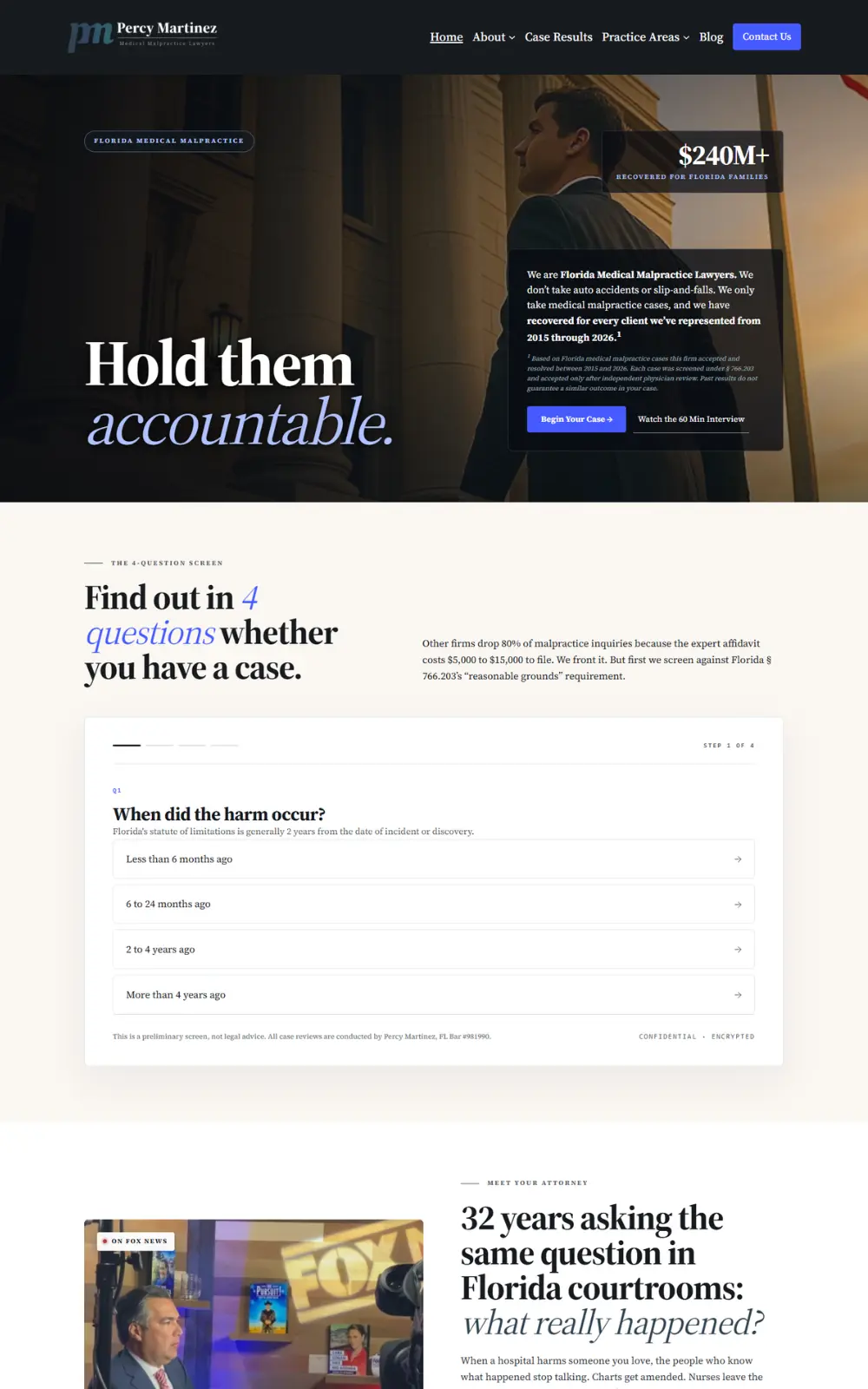
Three site rebuilds over ten years, in 2016, 2022, and most recently in 2025, each one done with proper URL migration so the firm never lost a single ranking through any of them. The architecture treats intake like an emergency room, with a 5 minute response target and call tracking wired into the case management system, because that is how a Miami medical malpractice firm actually converts leads into signed retainers.
Illustrative example; past performance is not a guarantee of future results.
What makes this different.
Five things that separate how I build Miami Beach SEO from how an 80 account agency does it.
Built for the local market.
Before I built marketing systems I worked the Percy Martinez intake phones, watching which web leads turned into signed retainers and which ones went cold. That data shapes the build, not a template. Visitor scenarios get their own pages, Spanish is structural and not a translation overlay, and the page elements that actually move conversion for hotel and DUI matters get prioritized over the ones SEO checklists tell agencies to ship.
Entity relationships and practice depth.
Structured around how Google reads your firm in its knowledge graph, with practice area clusters and supporting matter pages, so the search engine treats you as a real local law firm and not a directory.
Bilingual and local query strategy.
Content written for native Spanish search intent, not translated marketing copy. Bilingual queries like “abogado de hotel Miami Beach” get their own page architecture, not a translated overlay.
Visibility that produces consultations.
Vanity rankings are not the goal. If a top three ranking does not produce calls, it is the wrong term, and we kill it instead of celebrating it. The reporting ties every page to the calls and signed cases it produced.
One operator, ten years deep.
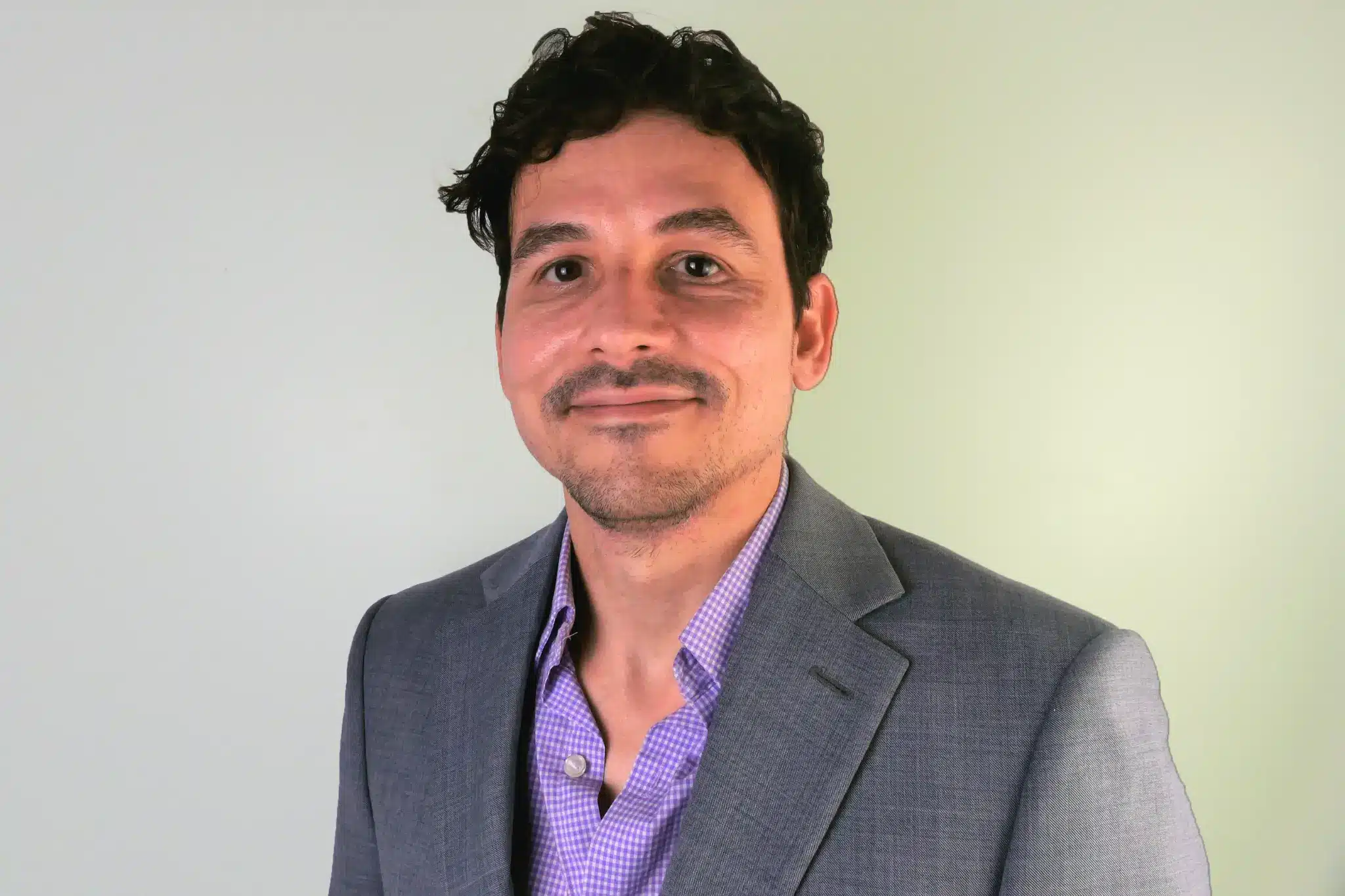
I spent ten years inside one Florida law firm before doing this for anyone else. No account manager rotation, no junior staff handling your weekly review, no quarterly business review designed to make you feel important. The same person who learned this work from the intake side of the desk is the one running your account every week.
Miami Beach personal injury is on the open roster.
I run a national roster of 50 firms total, with one firm per practice area per metro. When the slot is taken, no other firm in that market gets the same playbook. Florida medical malpractice is closed (Percy Martinez P.A. locked the slot statewide).
Miami Beach, FL · Personal injury (lead) + hospitality, DUI
First qualifying firm wins. Tourist and visitor cases, hotel and club premises liability, nightlife corridor DUI, bilingual visitor architecture.
- Personal injury (primary, including hospitality and premises), DUI, criminal defense, family
- Free feasibility audit before any commitment
- Slot locks the moment the math pencils out and you sign
Florida medical malpractice
Locked statewide by Percy Martinez P.A. and Jorge L. Flores P.A. for over a decade. No other Florida med mal firm will be accepted into the roster.
- Miami, FL · Percy Martinez
- Kendall, FL · Jorge L. Flores
- Tampa, Orlando, Jacksonville, Port St. Lucie · all locked
A metro locks the moment a qualifying firm signs and the audit confirms the economics, intake, and competitive position make sense. No waitlist, no second slot, no exceptions. Once locked, the market is off the table for your competitors permanently.
Claim Miami Beach
Paralegal first.
Marketer second.
Most legal marketers come from advertising. I came from the intake desk, fielding medical malpractice calls at Percy Martinez P.A. and watching cases develop from the first phone call to the signed retainer, which is the part most agencies have to fake. You work directly with me, and every Friday you get a written report in plain English naming what changed in your account and what it cost.
“If the math does not work, I will tell you. I would rather lose the engagement than recommend something that does not make sense for your firm.
Before
you book.
If your question is not here, just call me directly at 941 626 9198. I answer most calls.
Plan on 4 to 6 months for meaningful Map Pack movement and 6 to 9 months for organic ranking gains on practice area terms. Miami Beach is competitive on hospitality and DUI keywords because mainland Miami firms target them aggressively, but most local firms run on FindLaw and Justia templates with no real entity work for the barrier island, so the gap closes faster than the budget would suggest.
Yes. Miami Beach has a large Spanish-speaking resident base plus a steady stream of Latin American visitors and second-home owners. Spanish queries for hotel injuries, DUI, criminal defense, and family work carry real volume, and almost no Miami Beach firm builds for them properly. Translated marketing copy fails here because visitors and residents phrase queries differently than mainland Miami clients.
Hospitality and premises liability personal injury, DUI from the nightlife corridor, tourist arrest defense and criminal work, condo and HOA disputes, entertainment law, and high-asset family work. Miami Beach case values run higher than most Miami-Dade suburbs because the client base includes wealthy residents, business travelers, and Latin American second-home owners who can afford to fight matters out properly.
Yes, and they are one of the highest impact targets here. Miami Beach attracts millions of visitors a year, and a meaningful share end up in some kind of legal situation: hotel and club injuries, DUI arrests, premises incidents, fights and disturbances. These clients are searching from a hotel room or back home, often panicked, often comparing options on a phone. A page built specifically for visitor scenarios in English and Spanish converts at multiples of a generic personal injury or criminal defense page.
Calls, form submissions, and signed cases tracked back to the page that produced them, with city-level filtering so we know inquiries actually came from Miami Beach searches and not bleeding in from generic Miami terms. Rankings and traffic are leading indicators but not the goal. The reporting I send every month shows which pages produced inquiries, which keywords drove them, and which converted into signed cases.
They serve different jobs. Google Ads pays per click and turns off when you stop spending. SEO compounds over time and keeps producing once it is built, but it takes months to start. The honest answer is most Miami Beach firms should run both, with SEO as the foundation and Google Ads filling in the gaps for high intent terms where you cannot rank organically yet, especially on competitive hospitality PI and DUI keywords where mainland firms outspend Miami Beach firms heavily.
Florida law firm SEO, by city.
Each city page is built around how clients there actually search. Miami Beach is its own market: hospitality and tourist heavy, with buyers searching from hotels and airports more than living rooms. The other cities run on completely different demand, demographics, and corridors. Pick the page that matches your firm.
Get a Miami Beach law firm
SEO audit.
A 14 day diagnostic, no fee, no obligation. You walk away with a written audit report whether or not we work together.
- Search intent and keyword gap review. Where your firm should rank, where you do not, and why.
- Local visibility and Maps analysis. GBP, citations, reviews, Map Pack performance against the actual Miami Beach competitive set.
- Practice area content opportunity map. Which pages to build first, in what order, and what each one should target.
Free audit · 14 day turnaround · No obligation · Florida Bar 4-7 reviewed