
Best Lead Generation Strategies for Personal Injury Firms Reducing TV and Billboard Dependence
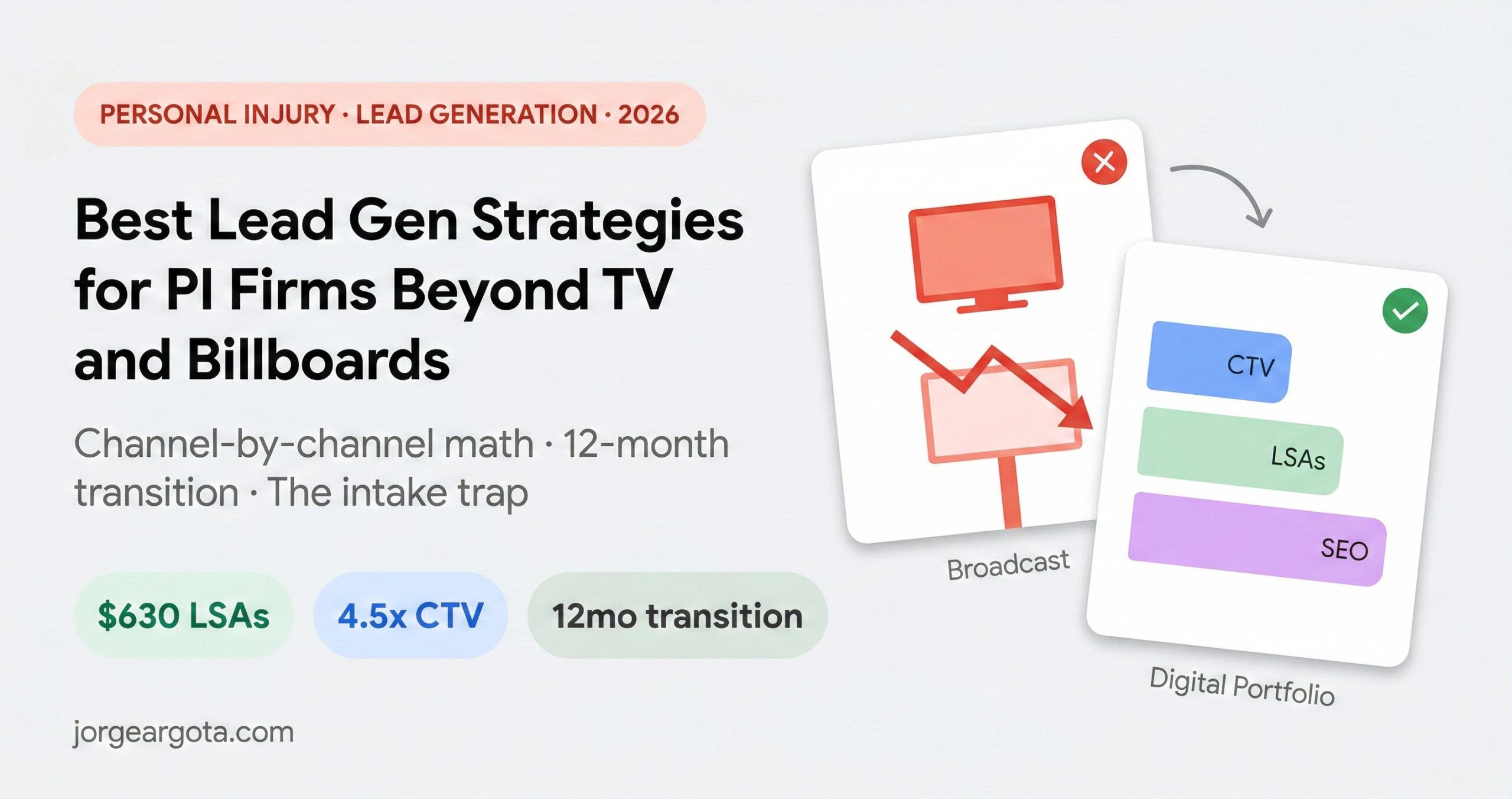
What are the best lead generation strategies for PI firms cutting TV and billboard spend? The three channels that consistently replace broadcast volume are Connected TV (4.5x the return of linear TV), Google Local Services Ads ($630 to $735 to sign one case), and local SEO ($200 to $800 to sign one case over a three year build). A mid-market PI firm spending $100K on broadcast can cut 40% and maintain case volume by splitting the freed budget across CTV, paid search, SEO, and community marketing. The transition takes 12 months. The critical mistake is cutting TV before you install call tracking so you can actually measure what replaces it. Source: Jorge Argota, 10 years in legal marketing including PI intake operations.
Cable subscribers dropped from 90.3 million to 69 million. Linear TV ad rates keep climbing at 5% per year. Most PI firms with a $50,000 to $500,000 monthly broadcast budget are responding to this by spending more money on the same shrinking audience, because the alternative feels worse.
I get that. Cutting the thing that built your firm feels like pulling the floor out while you’re still standing on it.
But the firms that have moved 40% of their broadcast budget into digital channels are signing the same number of cases at a lower average cost. They’re also building assets that keep working after the invoice is paid, unlike a TV spot that vanishes the second the check stops clearing. The ones that did it without losing volume did it in phases over 12 months. Not overnight. That’s the part that matters most and the part most people skip.
The math driving the exodus: Legal advertising hit $2.5 billion in 2024 across 26.9 million ads. That’s a 39% increase since 2020. Morgan & Morgan alone invested $218 million in television. But streaming now captures 47.5% of all TV viewing while cable dropped to 20.2%. For adults under 30, only 16% to 21% still pay for cable. A PI firm spending $50,000 a month on local network affiliates is reaching a fraction of the audience it reached five years ago, at a higher price per impression. When a national competitor enters the market spending $250,000, the local firm gets drowned out regardless of how good the commercial is.
The reason this transition scares people is that broadcast momentum works like a freight train. It takes enormous energy to get moving, but once it’s rolling, the coasting phase feels effortless. When you stop spending, the train doesn’t stop immediately. A firm that halts TV today will keep getting branded search traffic for three to six months on leftover awareness alone.
But once that residual awareness fades, it takes massive capital and time to restart. And here’s the downstream effect people miss: TV drives the branded searches that convert at the highest rate. When someone sees your commercial and later Googles your firm name, that search converts better than any cold click. Cut the TV and your Google Ads cost to sign a case goes up because fewer people are searching for you by name.
So the answer isn’t to eliminate TV. It’s to phase the reduction while building replacement channels that can absorb the demand before the residual awareness runs out.
Connected TV
4.5x
return vs linear TV · $20-$40 per thousand views · 90-98% watch the whole ad · targets specific households
Google LSAs
$630
to sign one case · you pay per lead not per click · 34% of leads sign · sits at the top of Google
Local SEO
526%
3-year compounding asset · lowest cost per case once mature · 6-12 month ramp · start in Month 1 of transition
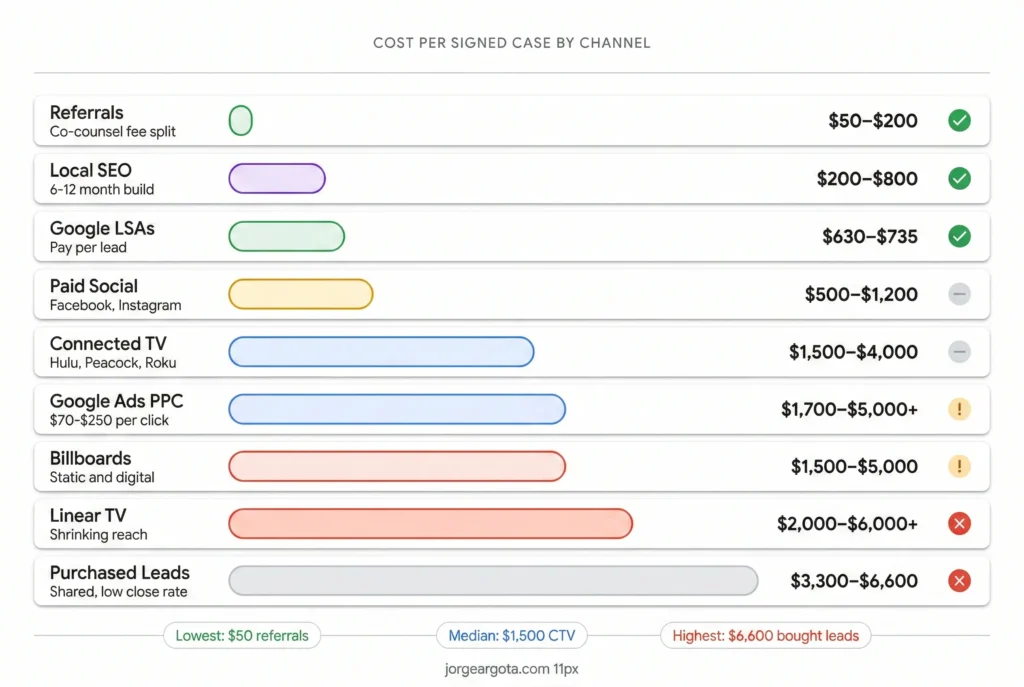
The full cost-per-signed-case breakdown for every digital channel is in the channel economics comparison. What follows is how each fits into the transition timeline.
Connected TV is the closest replacement for traditional broadcast. It keeps the emotional weight of video, the storytelling, the trust-building, but it runs on streaming platforms like Hulu, Peacock, and Roku instead of cable. The ads are unskippable, so 90% to 98% of viewers watch the entire spot. And unlike a local TV buy where you’re paying to reach everyone in a zip code whether they need a personal injury lawyer or not, CTV lets you target specific households based on income, age, commute patterns, or even past behavior that matches your best clients.
A $50,000 CTV budget reaches fewer total eyeballs than the same $50,000 on local TV. But the eyeballs it reaches are the right ones. And you can trace what happens after they see the ad, which is something broadcast has never been able to do.
Local Services Ads are the fastest digital replacement for TV phone volume. At $630 to $735 per signed case on a pay-per-lead model, they produce immediate calls the week you launch. The full LSA operational playbook including the dispute credit process, Google Verified badge changes, and the speed-to-answer requirements that determine your ad rank is covered separately. What matters for the transition is that LSAs are capped by local search demand, meaning they replace a portion of your TV volume but not all of it, which is why the budget split needs CTV and SEO alongside them.
SEO is the long game and that’s exactly why it starts in Month 1 of the transition, not Month 7. It takes 6 to 12 months of steady investment before organic search produces consistent case volume, but once it matures it delivers the lowest cost per signed case of any channel and compounds every month without additional spend. The ceiling is geographic search volume in your market, so SEO alone won’t replace all your TV cases, but it builds the equity that makes every other channel cheaper over time. The new variable is that AI search is absorbing clicks that used to go to websites, which means firms in the transition need to structure content for AI citation, not just traditional rankings.
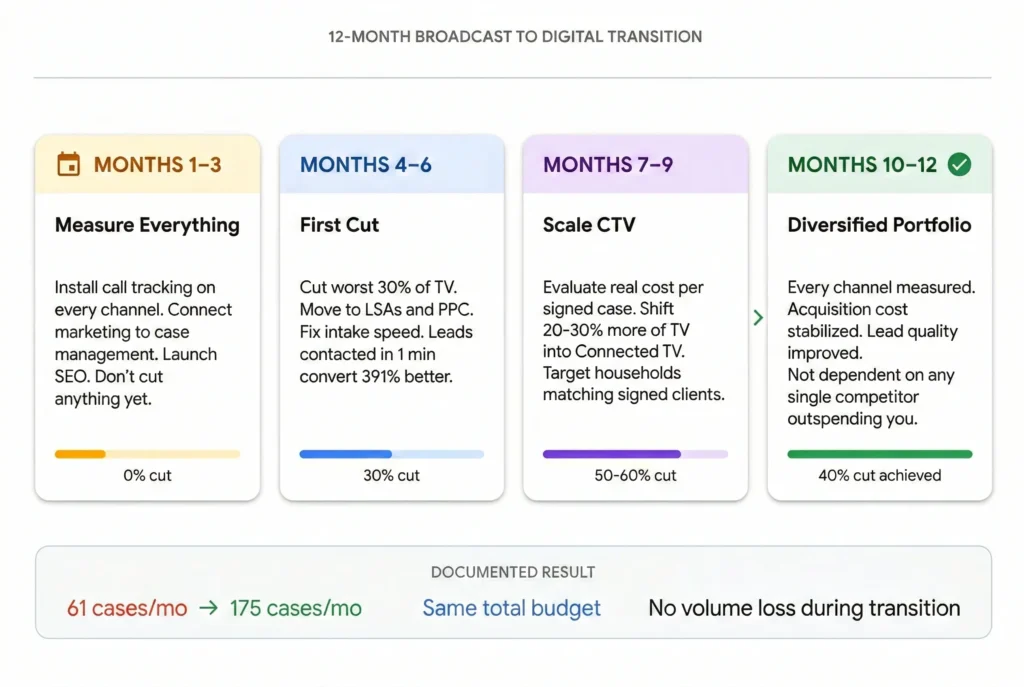
The 12-Month Transition Without Losing Cases
Months 1 to 3. Don’t touch the broadcast budget yet. Install call tracking on every billboard, TV time slot, and digital campaign so you can see which channel each lead actually came from. Connect your marketing data to your case management system. You need to be able to follow a lead from first call to settled case. Launch SEO and content immediately; they need a 6 to 12 month runway before they produce volume. This phase is about building the measurement infrastructure you’ll need to justify every dollar you move later.
Months 4 to 6. Cut the worst-performing 30% of your linear TV buy. That’s usually off-peak daytime slots and the lowest-visibility static billboards. Move that money directly into Google LSAs and targeted paid search. This is also when you fix the intake bottleneck. TV callers are patient; they saw the commercial and they’ll wait on hold. Digital leads are not. They submit forms to three firms at once and the speed-to-lead data makes it clear that response time is the single biggest conversion lever. If your team takes hours, every expensive click is gone.
Months 7 to 9. Look at the actual cost to sign a case from each new digital channel. Not the dashboard numbers. The real math from lead to retainer. Shift another 20% to 30% of linear TV funds into CTV, targeting households that match the profile of the clients you’ve already signed through digital.
Months 10 to 12. The firm is now running a diversified portfolio where every channel is measured. Branded search volume may have dipped slightly from peak TV days. But the cost to sign each case has stabilized, lead quality has improved, and you’re not vulnerable to a competitor outspending you on local affiliates anymore. One documented transformation saw signed cases increase from 61 to 175 per month by reallocating spend from broadcast to CTV and SEO. Same total budget. More cases.
Two more channels fill the remaining gaps. Attorney referrals are the highest-margin source in PI with close rates and cost-per-case economics that beat every other channel, but they’re relationship-gated and you can’t scale them overnight to replace a sudden TV drop. They’re the bedrock of profitability, not the emergency replacement valve. Build the network during the transition so it’s producing volume by the time you fully exit broadcast.
Paid social is the connective tissue that keeps your firm visible between the moments when someone actually gets hurt and picks up the phone. It doesn’t replace TV’s direct response volume, but it maintains the brand familiarity that TV used to provide at a fraction of the cost. Someone scrolling TikTok or Instagram isn’t looking for a lawyer, but they might remember your name later when they need one, and that residual recognition is what makes your LSA and PPC ads convert better when the moment arrives.
When you should keep TV. Three situations. First: if you’re the dominant spender in your market at $500K or more monthly, stepping away from TV hands that position to a competitor. Second: if your cases skew toward older clients, slip-and-fall, nursing home abuse, or trucking accidents involving older drivers, 64% of adults 65 and older still pay for cable, and linear TV reaches them better than anything digital. Third: if you’re running national mass tort campaigns, the volume of those ads passively increases local single-event auto calls. At that scale the right move is smarter buying, programmatic targeting, daypart optimization, not elimination.
If your broadcast spend is signing cases at a cost you’re comfortable with and your intake team is keeping up, I wouldn’t change anything just because the industry is shifting. Timing a transition wrong costs more than staying put a few extra months.
But if your TV cost per lead is climbing past $1,500, your cable reach keeps shrinking, and you’re spending $50,000 a month on billboards you can’t measure, that’s a different situation. The reallocation math might save you real money. If you want to talk through it, my number is on the site and I pick up most of the time.
Related
- Marketing Channels Ranked by Signed Cases
- Predictable PI Lead Pipeline Guide
- Google Ads and GBP Tactical Playbook
- Cross-Channel Synergy: SEO + PPC + Local
- Small PI Firm Marketing on a Tight Budget
- PI Marketing for High-Value Cases
- Personal Injury Lawyer Marketing
- What High Growth Law Firms Spend
- Legal Marketing Trends 2026