
Your Rankings Don’t Matter If They’re Not Signing Cases
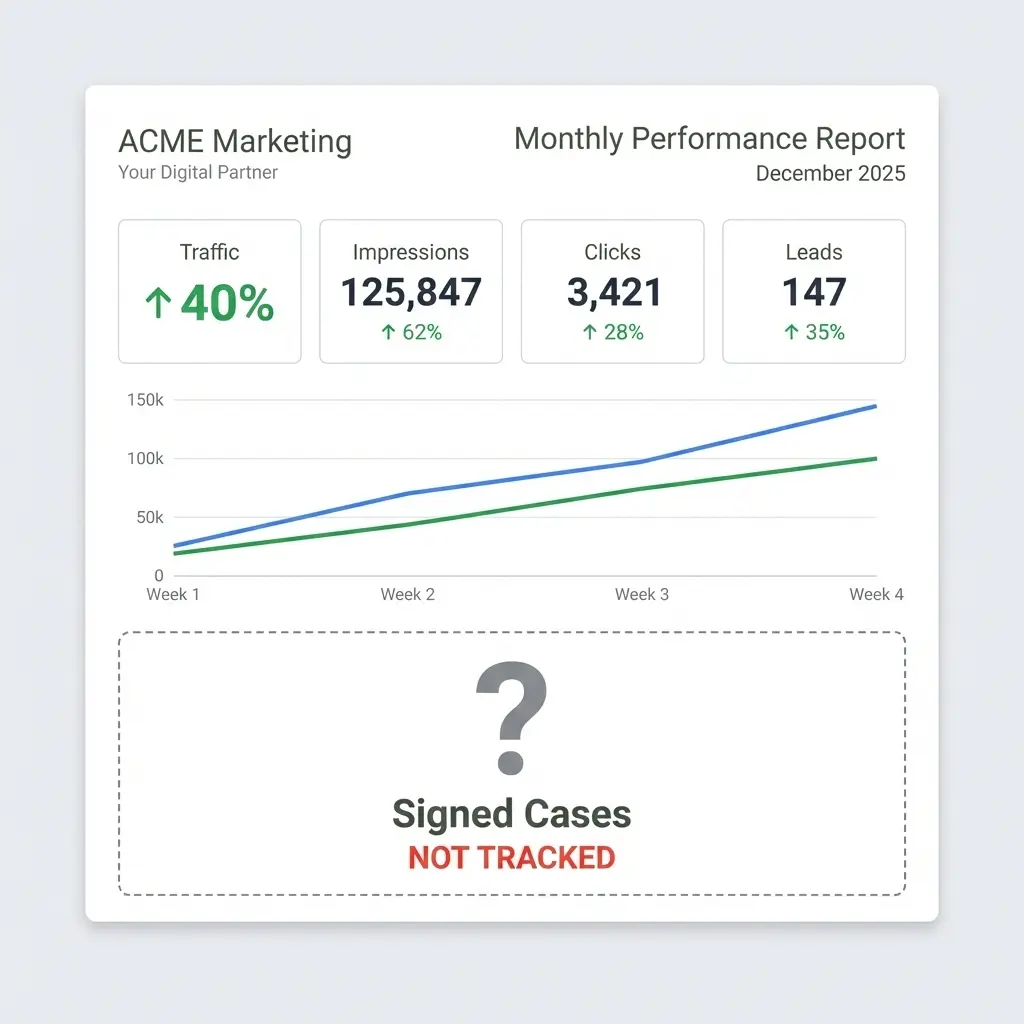
I spent 10 years inside a law firm doing intake, going to court, and watching which marketing actually brought in clients. Most agencies report traffic and rankings because those numbers always go up. I track to signed cases because that’s what pays your bills. If your SEO isn’t generating clients, nothing else matters.

★★★★★
Rated 5 Stars on Google
10
Years Inside One Firm
14,000
Monthly Visitors
483%
Traffic Growth (Percy)
5.0
Stars (Percy)
What your agency will not tell you
Most law firm SEO is smoke and mirrors. Agencies report impressions and traffic charts because those numbers always go up. But impressions don’t pay your mortgage. Traffic doesn’t sign retainers. The only metric that matters is: did this marketing produce clients?
I’ve inherited accounts from FindLaw, Scorpion, and similar agencies. The story is always the same; firms paying $5,000 to $10,000 a month and can’t trace a single signed case to their SEO. That’s not SEO. That’s expensive theater.

The other thing agencies won’t tell you: Google holds legal websites to a higher standard than almost any other industry. It’s called YMYL; Your Money or Your Life. Generic content from content mills doesn’t just perform poorly; it can actively hurt your rankings.
Testimonials
What 10 years of legal SEO actually looks like
Percy Martinez, P.A.
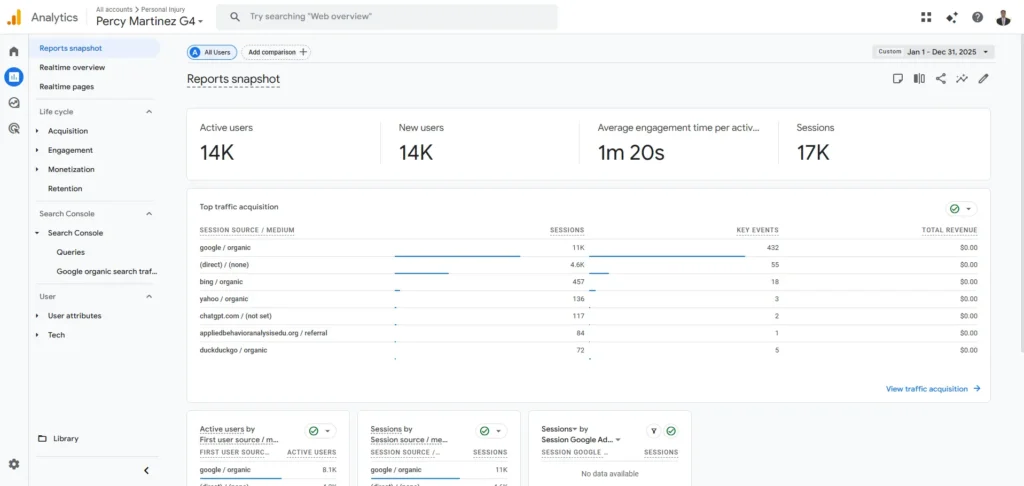
Percy’s traffic crashed to 2,400 monthly visitors after Google’s 2022 Helpful Content Update. The old content was thin; the kind of generic pages that every law firm has. Google’s update specifically targeted content that wasn’t genuinely helpful, and Percy got hit.
We rebuilt from the foundation. New content protocols focused on demonstrating real expertise. Technical fixes for site speed and structure. Local SEO cleanup across every directory. Link building from legitimate legal publications.
Result: 483% traffic growth. 2,400 to 14,000 monthly visitors. More importantly, the traffic that’s coming in is higher quality; people searching for the specific practice areas where Percy has expertise, not generic terms that attract tire kickers.
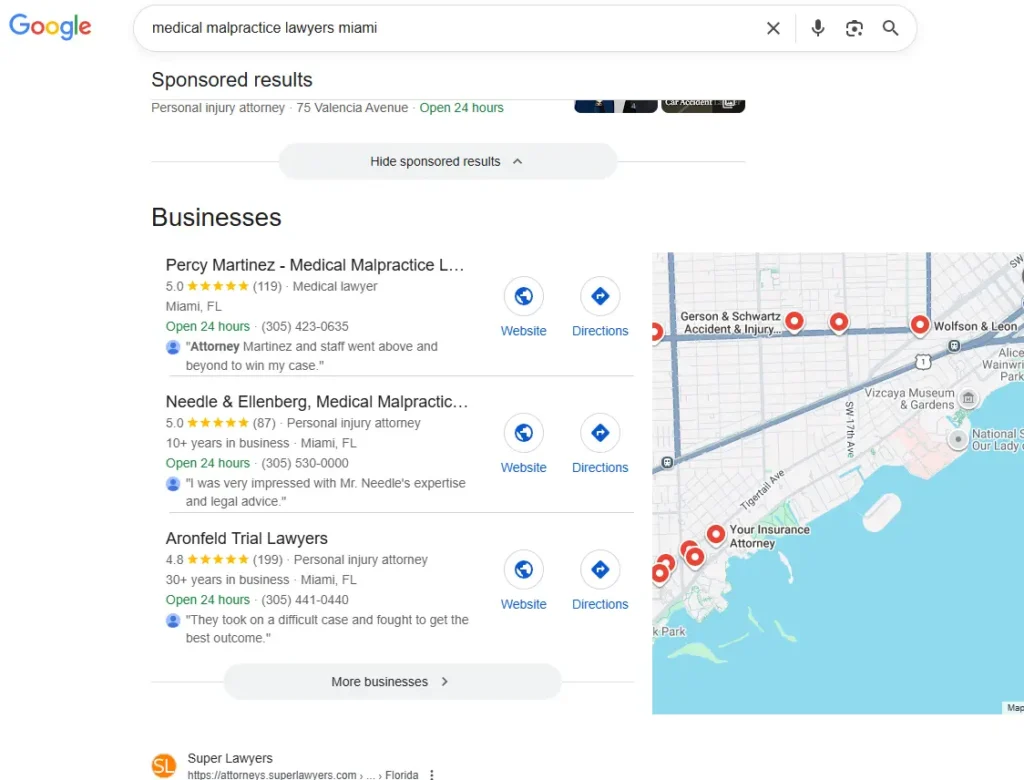
Percy now ranks first in the Map Pack for medical malpractice searches in Miami; above Morgan & Morgan. They have a budget we can’t match. What we can match is smarter strategy and better execution.
Jorge L. Flores, P.A.
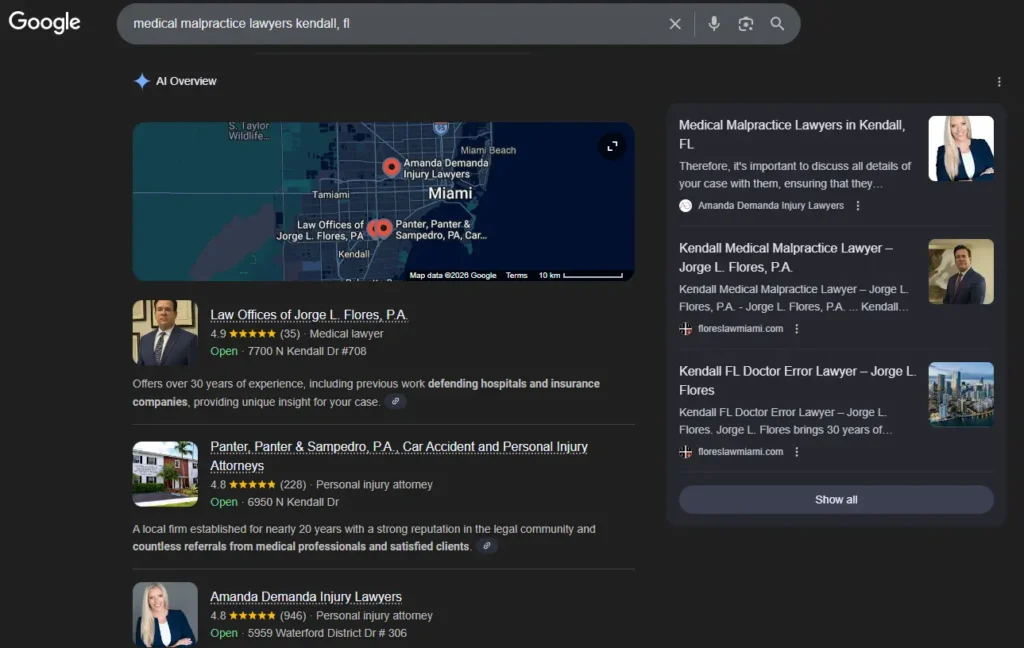
Jorge came from FindLaw paying $800/month for a site he didn’t own. Within 5 months, he was top of Map Pack in Kendall for medical malpractice. Not because we outspent the competition; because we built the right foundation: consistent NAP data, content that demonstrates expertise, a Google Business Profile that’s actually optimized.
What Doesn’t Work
Content Mills
Buying Links
Keyword Stuffing
Ignoring Tech
Set It

Content Mills
Hiring a service to produce 20 blog posts a month for $500 doesn’t build authority; it dilutes it. Google can tell when content is generic, thin, or written by someone who doesn’t understand the subject. A hundred mediocre pages hurt you more than ten excellent ones. Quality over quantity, always.
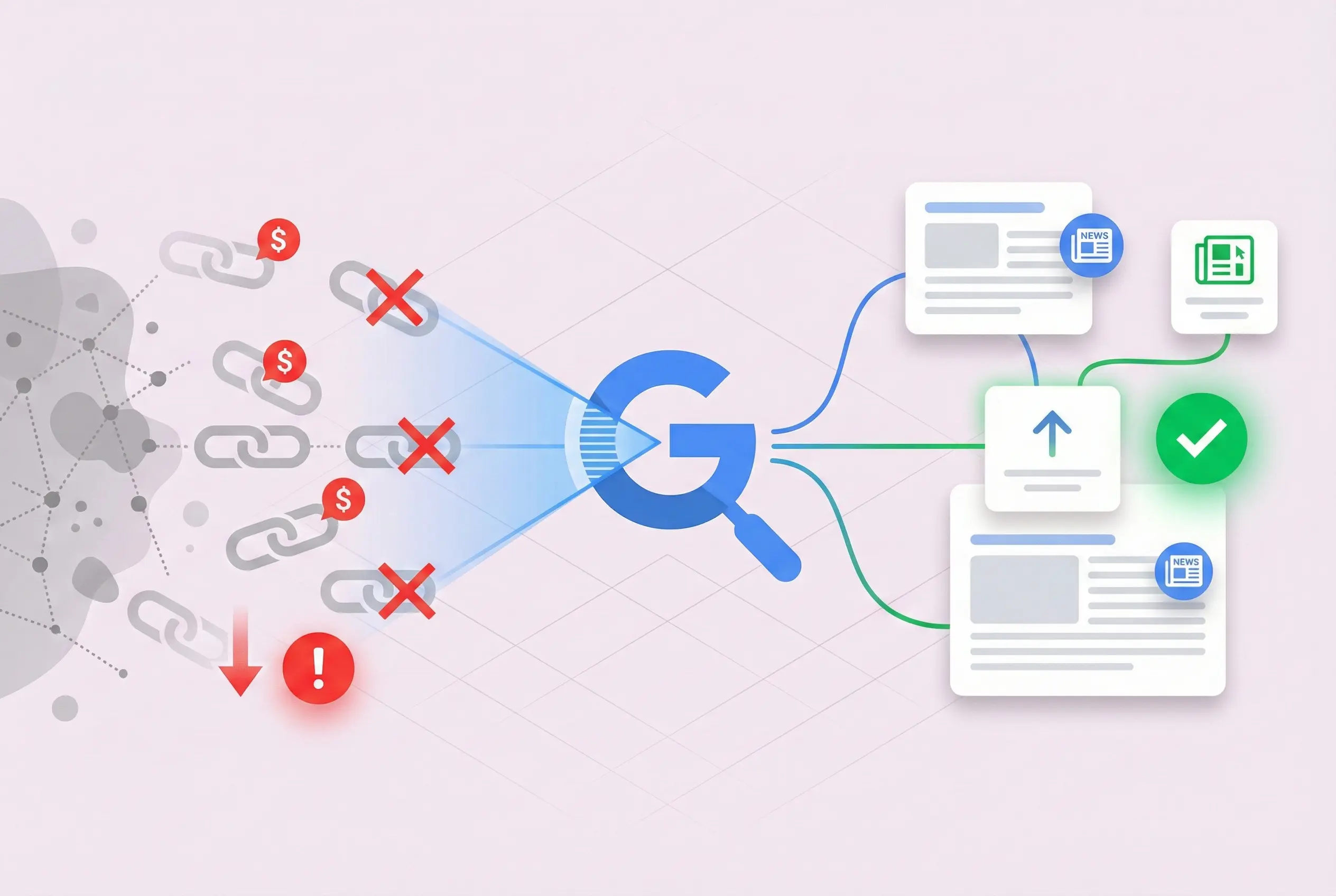
Buying Links
Cheap link building schemes get you penalized. Links from irrelevant sites, private blog networks, or link farms don’t build authority; they create risk. When Google detects manufactured link patterns (and they do), they discount those links or penalize your site entirely. Real authority comes from real mentions in real publications.
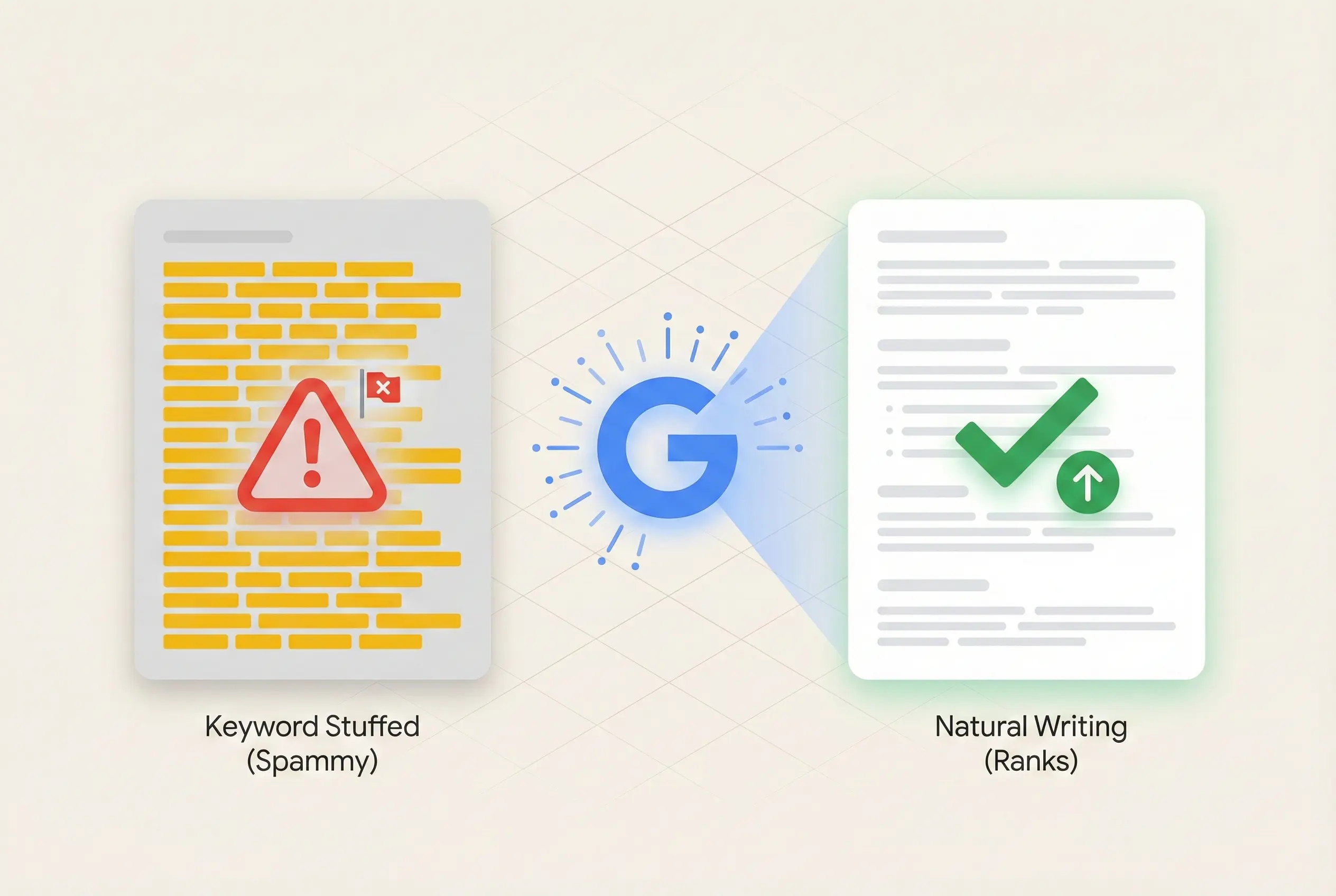
Keyword Stuffing
Mentioning “Miami personal injury lawyer” fifteen times on a page doesn’t help you rank; it makes you look spammy. Google’s algorithm is sophisticated enough to understand topics without keyword repetition. Write for humans, not robots.
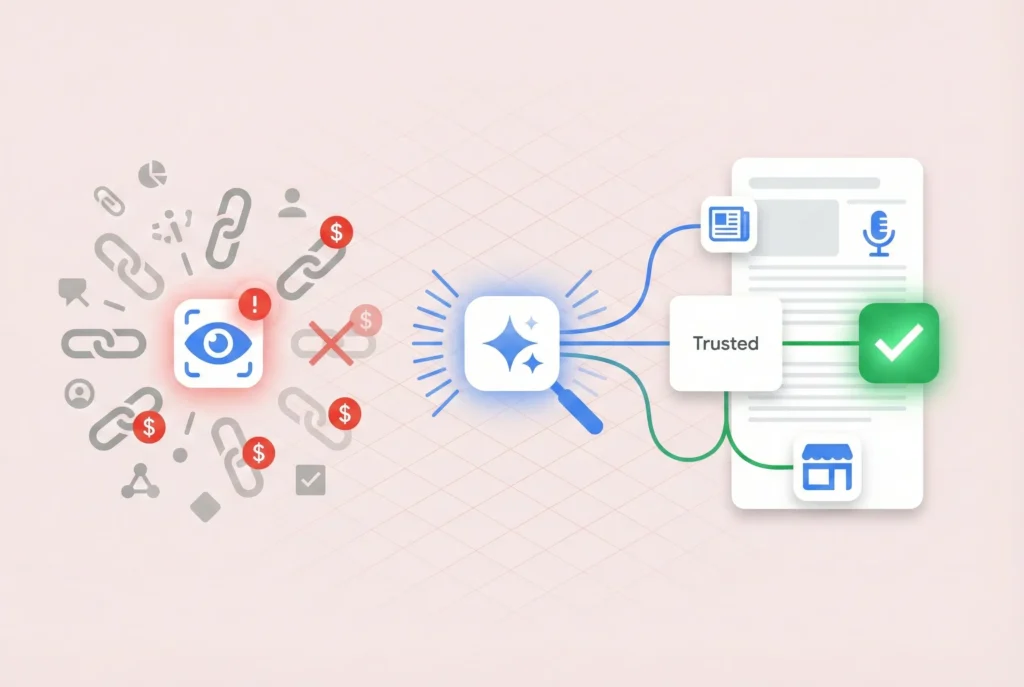
Ignoring Technical Issues
A beautiful website that loads in 8 seconds doesn’t rank. Broken links, missing meta tags, poor mobile experience, slow hosting; these technical issues compound over time. Most firms have never had a proper technical audit. They’re losing rankings to competitors who simply have cleaner sites.

Set It and Forget It
SEO isn’t a one time project. Google’s algorithm changes constantly. Competitors are always working to outrank you. Content gets stale. Technical issues accumulate. Firms that treat SEO as a checkbox rather than an ongoing investment eventually get passed by firms that don’t.
The SEO Work That Actually Matters

Technical

Content

Local SEO

Map Pack

Links
Technical SEO
The foundation everything else builds on. Site speed optimization; Percy’s site scores 100 on Google PageSpeed. Mobile responsiveness. Proper URL structure. Schema markup so Google understands your content. Fixing crawl errors, broken links, duplicate content. Most firms have never had this work done properly, and it’s often why their other SEO efforts aren’t producing results.
Content Strategy
Not blog posts for the sake of blog posts. Strategic content targeting high value keywords with content that demonstrates genuine E-E-A-T. Practice area pages that answer the questions potential clients actually have. Case result pages that show expertise without violating confidentiality. Attorney bio pages that build trust. Every piece of content has a purpose.
Local SEO
Google Business Profile optimization; complete information, proper categories, regular posts, photo uploads, Q&A management. NAP consistency across every directory where your firm appears. Citation building in relevant legal directories. Review strategy that builds social proof without violating bar rules. For most law firms, local SEO produces more cases than organic SEO.
Map Pack Spam Fighting
A significant percentage of listings in competitive Map Packs are fake; lead generation farms with virtual offices and no real attorney. These fake listings steal cases from legitimate firms. I identify and report them until they’re removed. It’s tedious work, but cleaning up spam in your Map Pack can move you up positions without any other changes.
Link Building
Earning links from sources that actually matter: legal publications, bar associations, news sites, university law school resources. Not link schemes or paid placements, but genuine authority signals from sites Google trusts. This is slow, difficult work, but it’s what separates firms that rank from firms that don’t.
What the SEO Data Shows for Legal
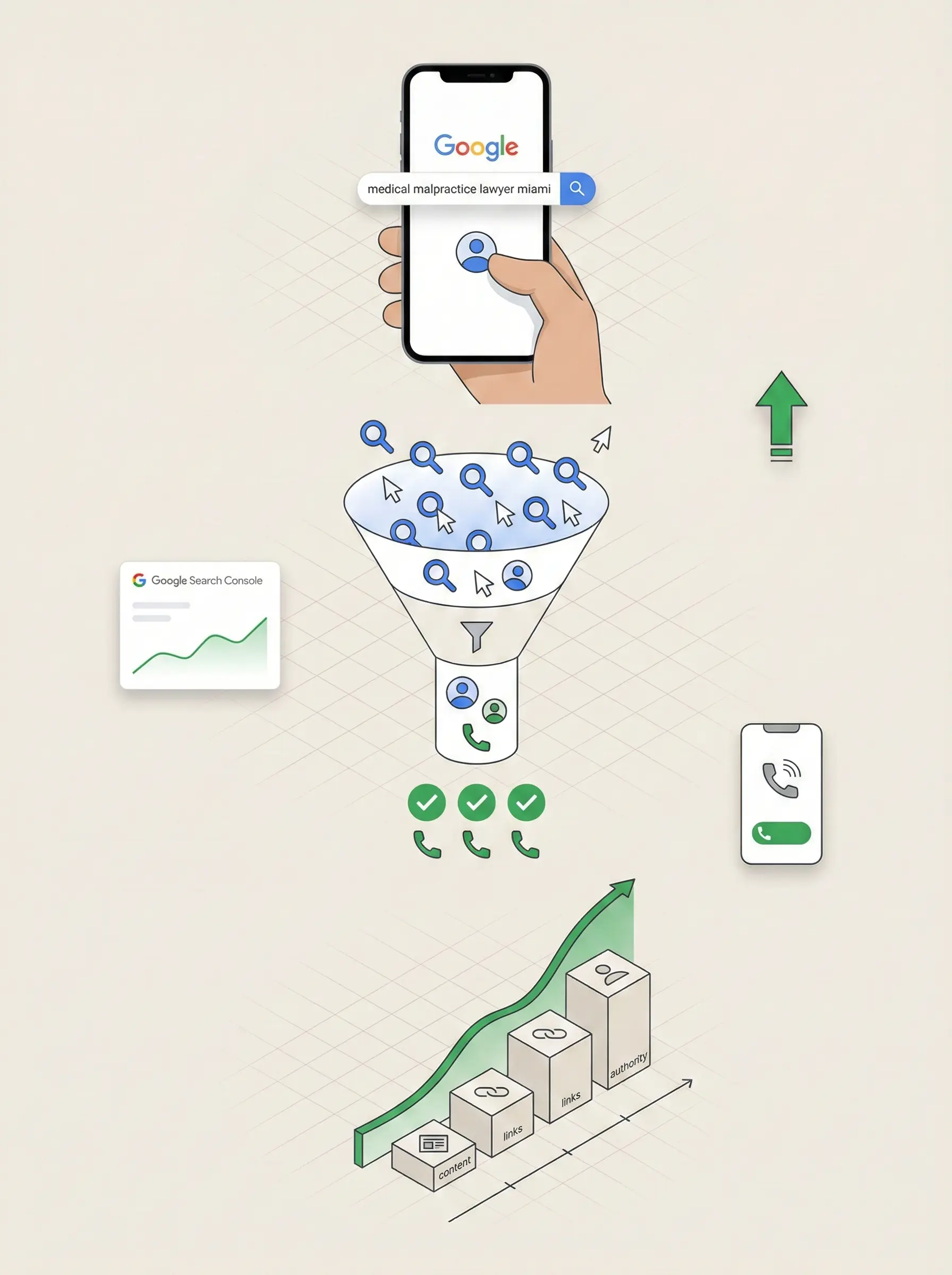
SEO produces the highest-quality leads of any marketing channel for law firms; when it’s done right.
Organic search leads convert at roughly 14.6% to actual cases, compared to around 1.7% for outbound leads like purchased lists. That’s nearly 9x higher conversion. Why? Because someone actively searching for a lawyer is already partway through their decision process. They have a problem and they’re looking for a solution.
The math on case value matters too. If your average case is worth $50,000 and you sign 2 additional cases per month from SEO at a cost of $5,000/month, your ROI is 20x. But if your average case is worth $5,000, the same investment might barely break even. I help you understand whether SEO makes sense for your practice before we start spending.
The compounding effect is what makes SEO powerful. Unlike PPC where you pay for every click forever, SEO builds equity. The content you create, the links you earn, the authority you build; it accumulates over time. After a year of solid SEO work, you’re not starting over; you’re building on everything that came before.
This Isn’t for Everyone
Works For:
Firms that can wait 3-6 months for results; SEO doesn’t produce overnight. Practices with case values high enough to justify the investment; if your average case is $3,000, SEO probably isn’t your best channel. Attorneys who want to build long term assets rather than rent attention. Firms willing to invest in genuine quality, not shortcuts.
Not For:
If you need cases next week, SEO isn’t the answer; that’s what PPC is for. If you’re looking for a cheap option, quality SEO costs what it costs; cutting corners produces garbage. If you want guaranteed rankings, nobody can promise that honestly. If you’re not willing to invest for at least 6-12 months, don’t start; you’ll quit before it pays off.

A Veteran, Not a Vendor
Jorge Argota
Ten years with one law firm: Percy Martinez, P.A. I didn’t learn SEO at an agency. I learned it inside a law firm; answering intake calls, going to court, sitting with patients in hospitals. I watched which marketing produced cases and which produced noise.
When Percy’s traffic crashed in 2022, I didn’t panic. I diagnosed the problem, built a strategy, and executed it over 18 months. The result was 483% growth and rankings that have held. That’s not luck; that’s understanding how this actually works.

We do not take competitors in the same practice area in the same county. If we work together, they can’t hire me.
— Argota Marketing
Educational Resources
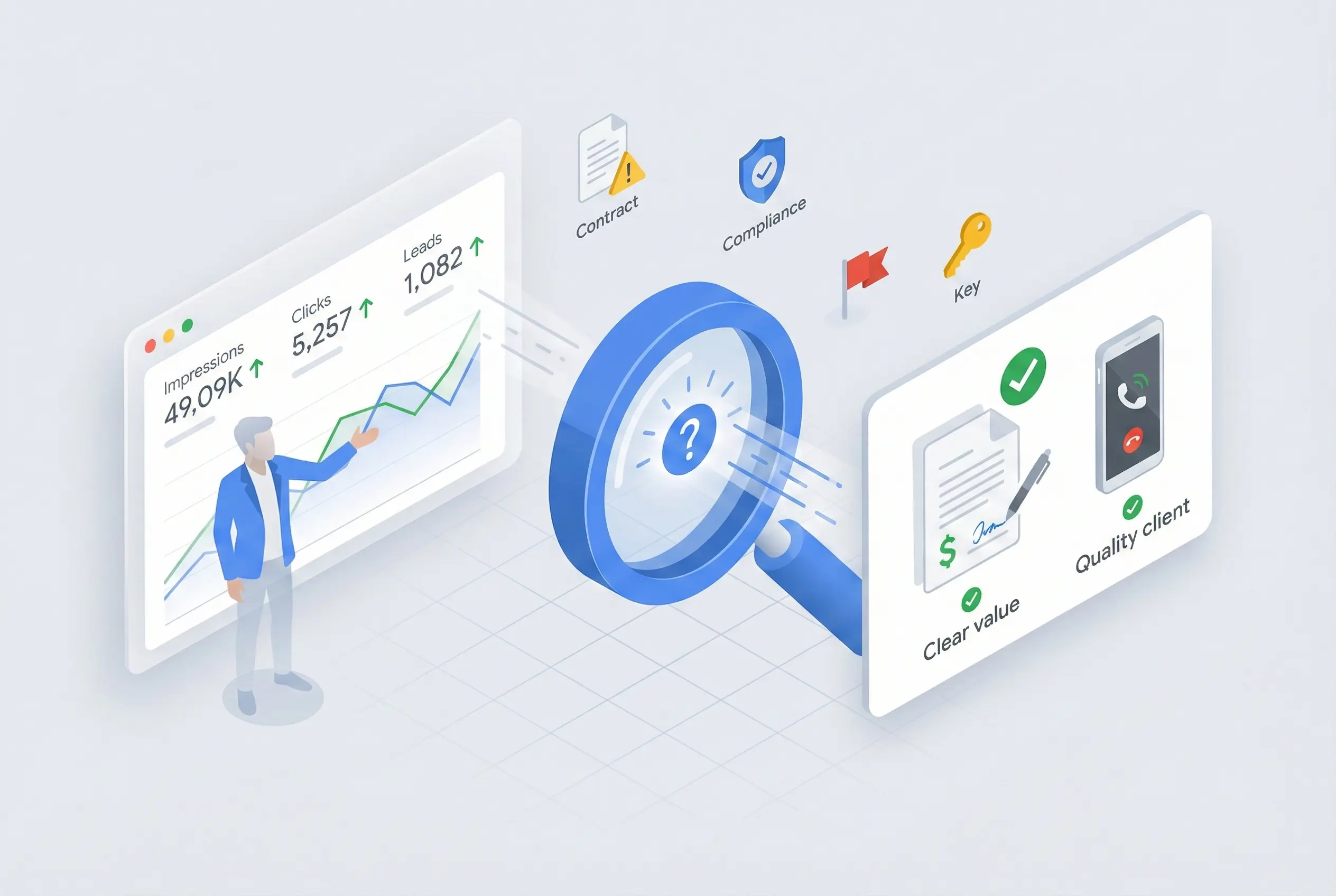
Questions to ask before signing. What to look for in reporting. Red flags that mean you’re overpaying for clicks instead of cases.
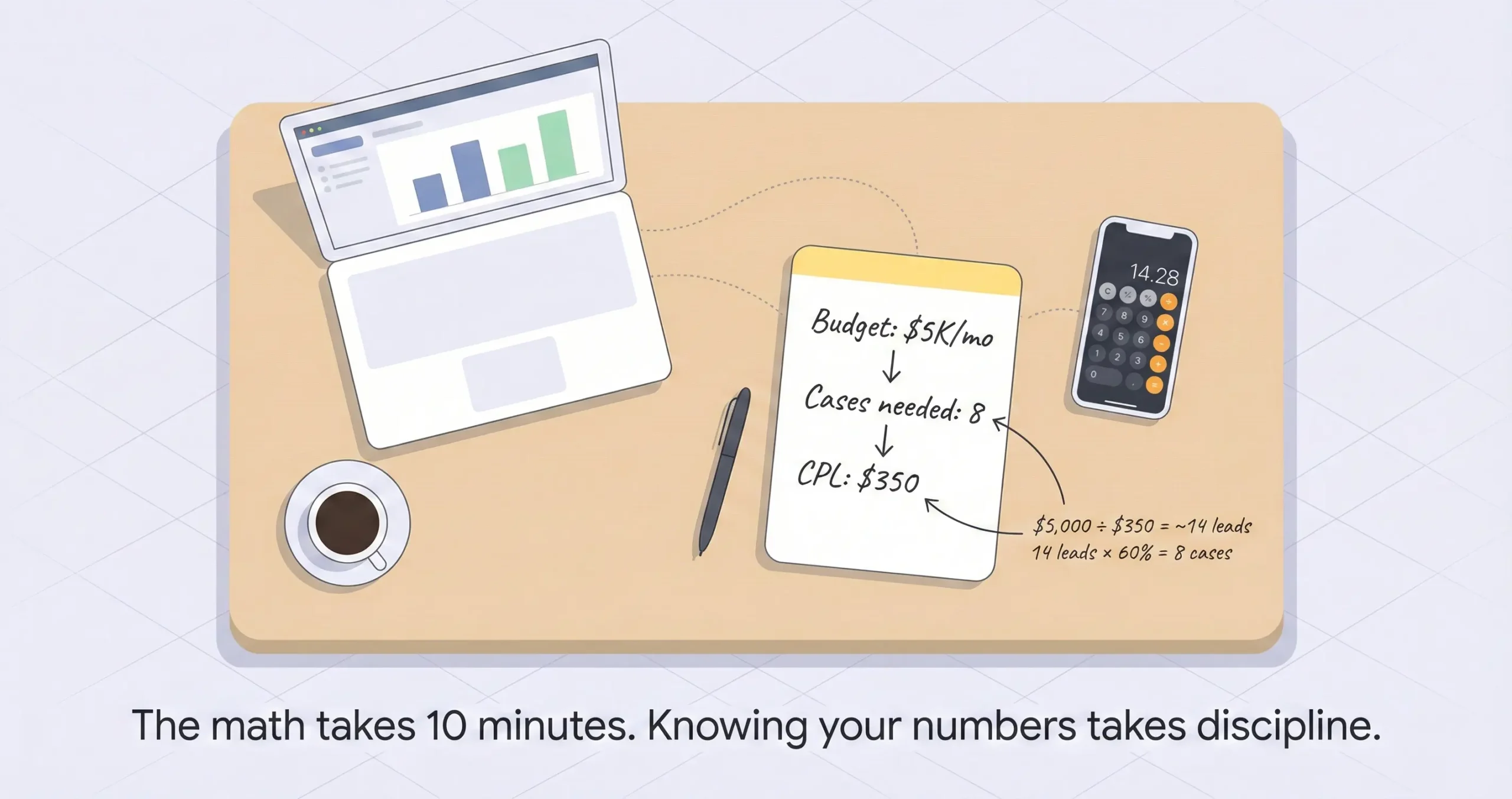
Cost Per Signed Case Calculator
Stop measuring clicks. Calculate what each signed case actually costs you in marketing spend. The only number that matters.
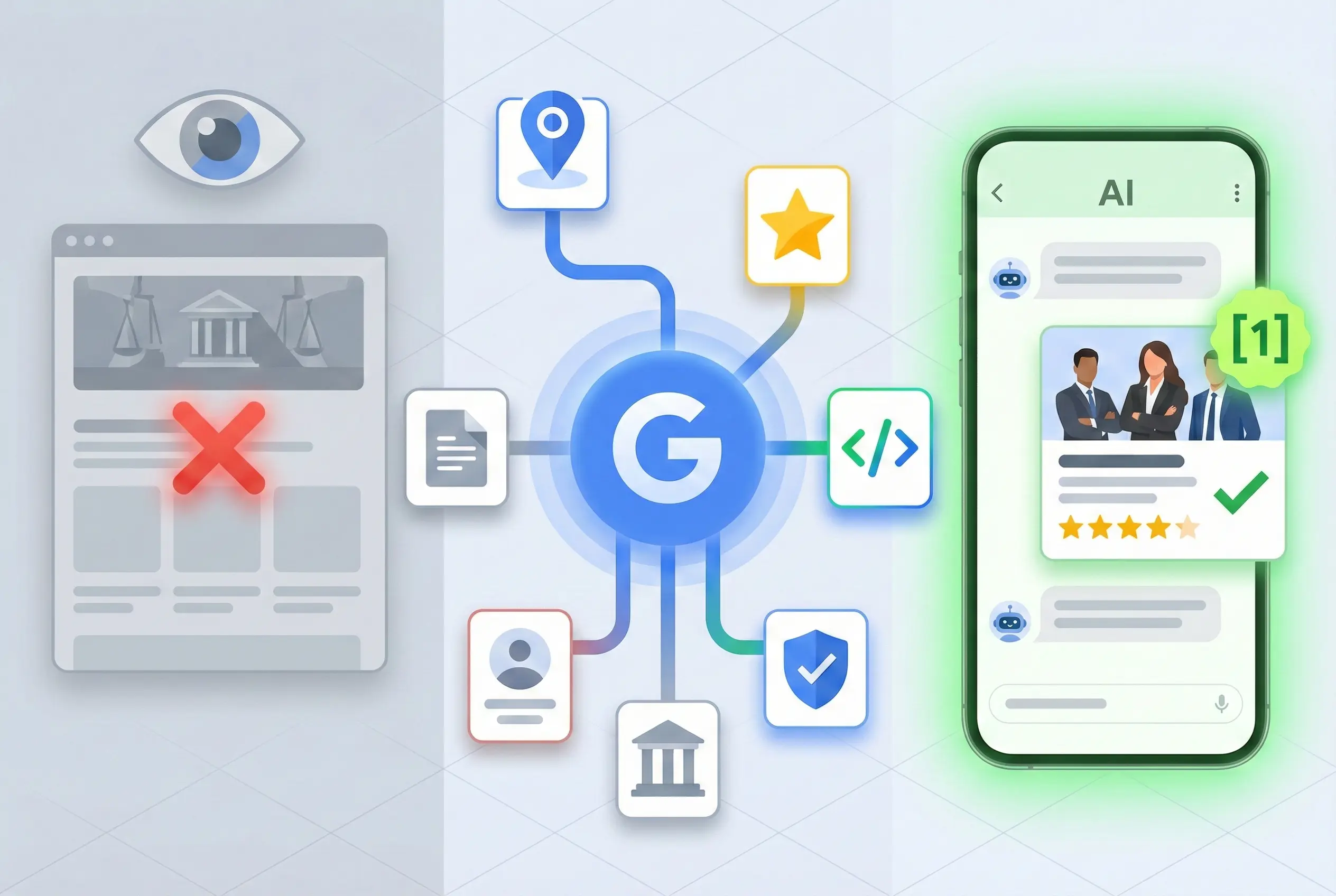
How Google’s AI Overviews work. Why some firms get cited and others don’t. What to change on your site to show up.
Questions We Get Asked
How long does SEO take to work?
Three to six months before you see meaningful movement in rankings. Month one is usually fixing technical issues and cleaning up your foundation. Month two is content and local signals. Month three is when things start moving. Anyone promising first page rankings in 30 days is either lying or doing something that’ll get you penalized later.
Do you guarantee first page rankings?
No, and run from anyone who does. Google’s algorithm isn’t something I control. What I can guarantee is the work; proper technical setup, content that meets E-E-A-T standards, local signals that are consistent across every directory. Rankings follow when the foundation is right, but nobody can promise specific positions.
Why did my traffic drop after a Google update?
Usually one of three things: thin content that Google now recognizes as unhelpful, technical issues that accumulated over time, or competitors who finally caught up. Percy’s traffic crashed to 2,400 after the 2022 Helpful Content update. We rebuilt and hit 14,000. Drops are fixable if you diagnose the actual problem.
What’s the difference between SEO and Local SEO?
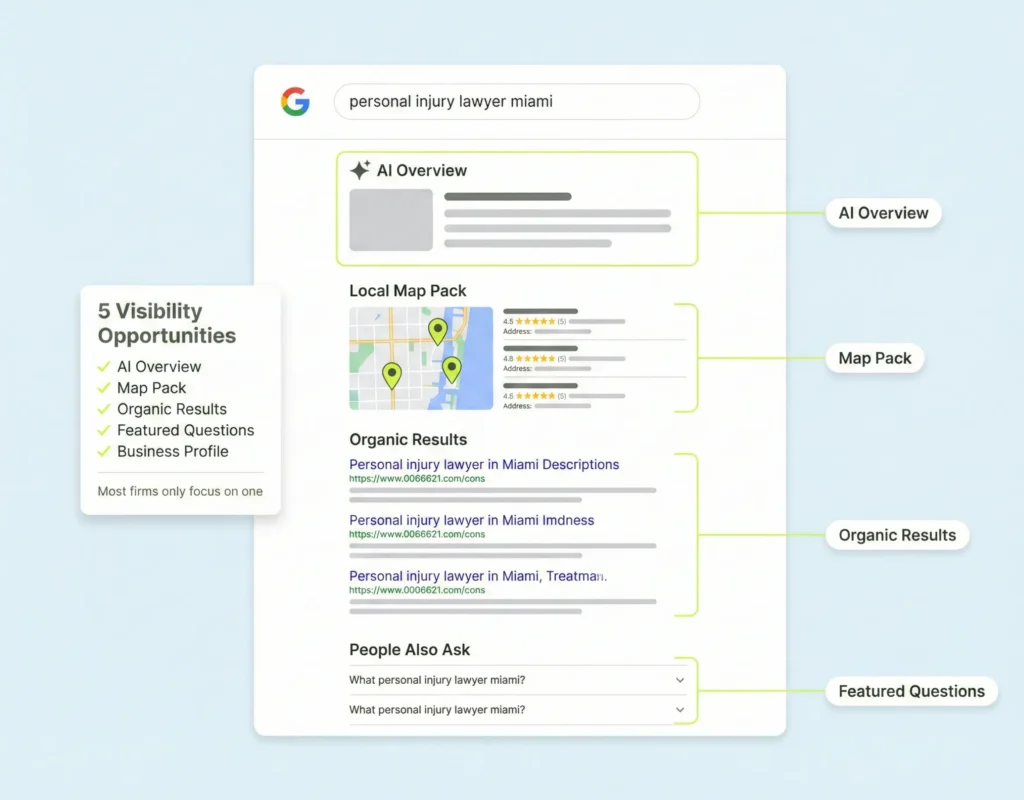
SEO gets you ranking in organic results; the blue links. Local SEO gets you in the Map Pack; the three businesses that show with the map. For law firms, Map Pack usually matters more. That’s where the calls come from. Organic results are below the ads, below the AI Overview, below the map. You want to be in the map.
Why do you focus on specific conditions instead of broad keywords?
Volume isn’t value. “Personal injury lawyer” gets searched a lot but half those clicks are fender benders worth $5,000. “Cerebral palsy malpractice lawyer” gets searched less but those cases are worth millions. We target keywords based on case value, not search volume.
Can I do SEO myself?
You can do basic stuff; claim your Google Business Profile, make sure your name and address match everywhere, post occasionally. But technical SEO, content strategy, and link building take time you probably don’t have. Most attorneys who try DIY spend six months getting nowhere and then call me anyway.
What if I’m already working with another agency?
I’d want to see what they’ve done first. Sometimes the foundation is solid and we build on it. Sometimes they’ve created problems; bad links, duplicate content, penalties; that need cleaning up before anything else. Either way I’ll tell you what I actually see, not what you want to hear.
How is this different from what FindLaw or Justia offers?
They own your website. Stop paying and you lose everything; your content, your rankings, your domain sometimes. I build on your property. You own the site, the code, the hosting account, the content. If we stop working together, everything stays yours. No hostage situations.
What does SEO cost?
Monthly retainers typically run $2,500 to $7,500 depending on where you’re starting, how competitive your market is, and how aggressive you want to be. I’ll give you a real number on a call once I see your situation. No hidden fees, no bait-and-switch.
What happens to my rankings if I stop?
They’ll plateau and eventually decline as competitors continue investing. SEO isn’t a one-time fix; it requires ongoing work to hold positions. But the foundation we build doesn’t disappear. You keep the website, the content, the technical improvements. Some clients dial back to maintenance only after hitting their goals.
See What’s Actually Holding You Back
Most law firms have never had a real SEO audit; one that looks at technical issues, content quality, local signals, and competitive landscape. I’ll tell you exactly where you stand, what’s working, what isn’t, and what it would take to rank for the keywords that bring in cases.
No contracts. No obligation. Just clarity on where you stand.