





I’ve been hearing agencies throw around this “6x conversion” number for AI search traffic and I figured it was marketing fluff until I actually dug into the data and found out it’s real; and in some cases it’s actually higher than 6x which is kind of terrifying if you’re a law firm that hasn’t thought about this yet.
Where the Number Comes From
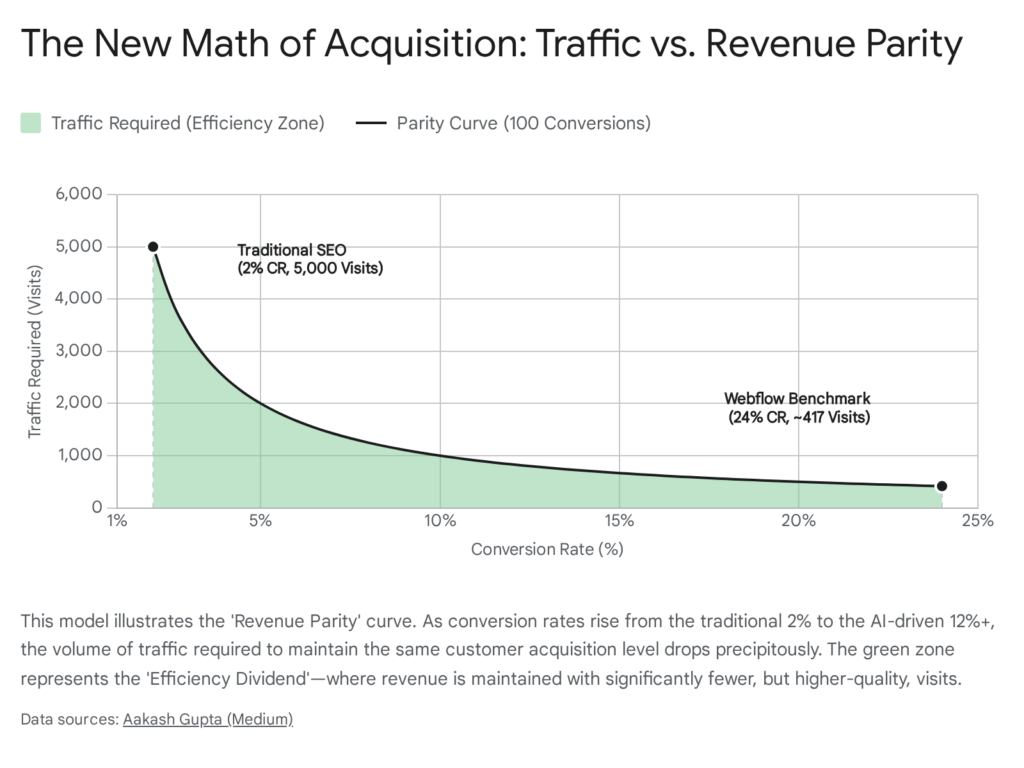
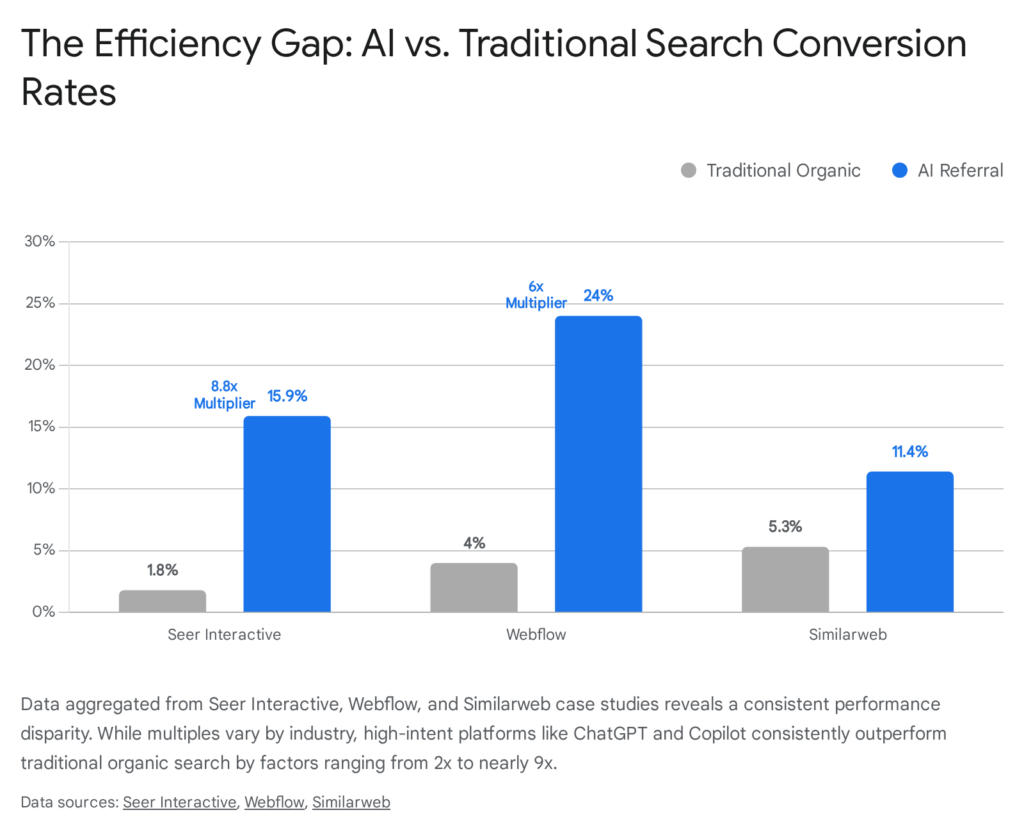
Webflow published internal data showing that users arriving via ChatGPT and similar AI tools converted at around 24% compared to 2-4% for traditional organic traffic. That’s a 6x to 12x improvement depending on how you measure it.
Seer Interactive ran a study comparing 11,000 AI-driven sessions against 14 million Google organic sessions and found ChatGPT traffic converted at 16% while Google organic converted at 1.8%; that’s actually closer to 9x.
Microsoft Clarity looked at over 1,200 publisher sites and found AI referrals converted at 17x the rate of direct traffic for subscription goals.
So the 6x number isn’t made up. If anything it’s conservative.
Why This Matters More for Law Firms
Here’s the part that stuck with me. The American Bar Association published a story about a lawyer who got a new client and asked how they found him. The client said they did a “deep search” with ChatGPT and it gave them a five-page readout on the firm; history, reviews, everything. The client said it was so thorough that they scheduled a full hour appointment without looking at anyone else.
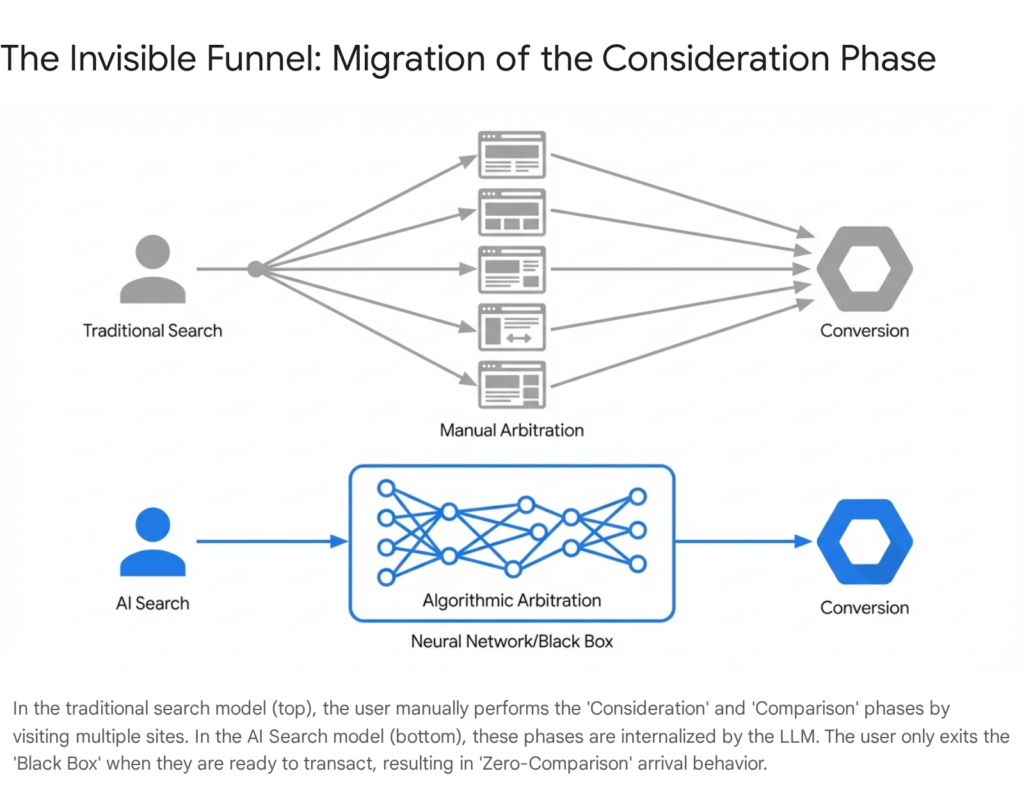
No comparison shopping. No opening five tabs. No calling three firms for quotes. Just one recommendation from the AI and that was it.
I’ve been doing legal marketing for 10 years and I’ve never seen behavior change this fast. The entire consideration phase of the funnel is happening inside the algorithm now before the person ever lands on your website.
What I’m Seeing with My Own Clients
I started optimizing for AI visibility with my Kendall client about five months ago. We built out deep content on specific medical conditions — not generic “we handle all cases” pages but actual detailed pages on informed consent violations, pre-suit requirements, hospital negligence. The kind of content that answers questions instead of just targeting keywords.
He started getting recommended in AI searches for medical malpractice in his area. Not because we gamed anything but because the AI could actually find clear answers on his site and verify his information across directories.
The traffic numbers aren’t massive yet but the calls that come through are different. They’re not comparison shopping. They already decided before they picked up the phone.
The Problem Nobody’s Talking About
The flip side of this is brutal. In traditional Google search, being ranked third or fourth still got you clicks. People would open multiple tabs and compare. In AI search there’s usually one recommendation — maybe two. If you’re not the one the AI recommends you get nothing.
It’s winner take all now and most firms don’t even know they’re not in the game.
What Actually Works
I spent a lot of time reading the research on what makes AI systems recommend one firm over another and it comes down to a few things that sound simple but almost nobody does well.
Your information has to match everywhere. If your State Bar listing says one address, your directories say another, and your website says a third — the AI skips you because it can’t verify who you are. We use Moz Local to sync everything so the AI sees one clear picture.
You need content the AI can actually quote. FAQ sections, direct answers, structured data. The AI needs to be able to pull a clean answer from your site and cite you as the source. If your content is just marketing fluff with no actual information the AI has nothing to work with.
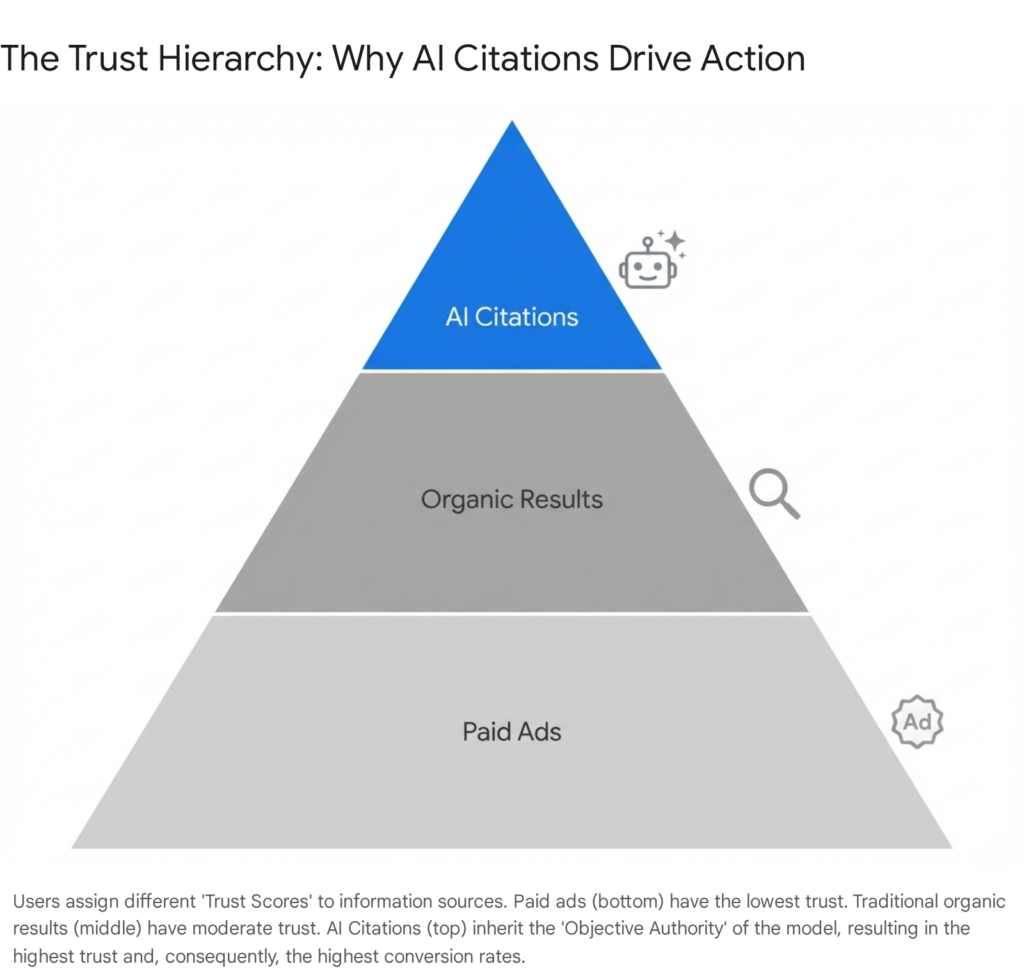
You need citations from sources the AI trusts. News mentions, bar association listings, legal directories that aren’t just pay-to-play. When ChatGPT is deciding who to recommend it’s looking at who gets cited by authoritative sources — not who has the most backlinks from random blogs.
The Math That Should Scare You
Here’s the part that keeps me up at night. Research suggests up to 60% of searches might end without a click soon because the AI just answers the question directly. Your traffic is going to drop and there’s nothing you can do about it.
But the traffic that does click through converts at 6x or higher. So you could lose 80% of your traffic and still have the same number of clients; if you’re the firm getting recommended.
If you’re not the firm getting recommended you lose the traffic and you lose the clients and you don’t even know why because your analytics just show “traffic down” without explaining that the traffic that left was never going to hire you anyway.
I Don’t Know How Long This Window Stays Open
Every major firm is going to figure this out eventually. Right now most of them are still arguing about whether AI search matters while their competitors are getting recommended by name in ChatGPT.
I’ve been doing this long enough to know that first mover advantage compounds. Percy Martinez dominated medical malpractice keywords in Miami because we targeted specific conditions before anyone else thought to. By the time competitors caught on he already owned those searches.
The same thing is happening now with AI visibility. The firms that build authority now are going to be the ones the AI recommends for years. The firms that wait are going to be fighting for scraps.
I’m not saying this to sell you something. I’m saying it because I’ve watched this pattern play out before and the firms that moved early are still benefiting a decade later while the firms that waited are still trying to catch up.
Sources:
- Webflow Internal Data (2024-2025)
- Seer Interactive: “How Traffic from ChatGPT Converts”
- Microsoft Clarity: “AI Traffic Converts at 3x the Rate”
- American Bar Association Law Practice Magazine: “Clients Are Consulting AI Before Calling A Lawyer”
- Acquia: “6x Conversion Rate Boost” Case Study