






What is the difference between exclusive and shared legal leads? An exclusive lead goes to one firm only; the person contacted you and nobody else is calling them. A shared lead gets sold to 3 to 5 firms at the same time, sometimes more. Exclusive leads cost more per lead, usually $300 to $500, but convert at roughly 10% because you’re the only one talking to the person. Shared leads are cheaper, often $50 to $100, but convert at about 2.5% because the caller’s phone is blowing up from other firms within seconds of submitting the form. When you calculate the cost per signed case, exclusive comes in around $3,000 and shared lands around $4,000, before you count the staff time and everything else that piles up.
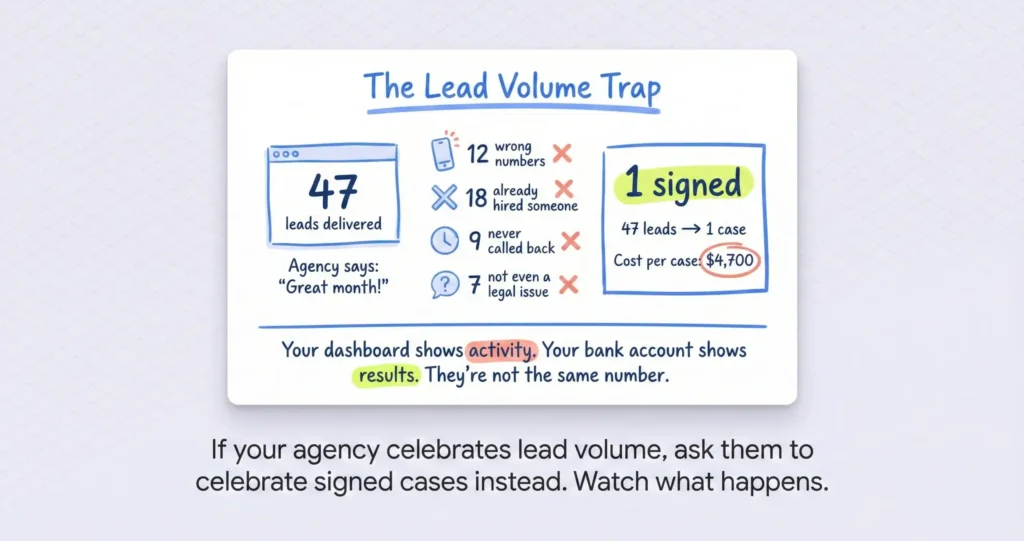
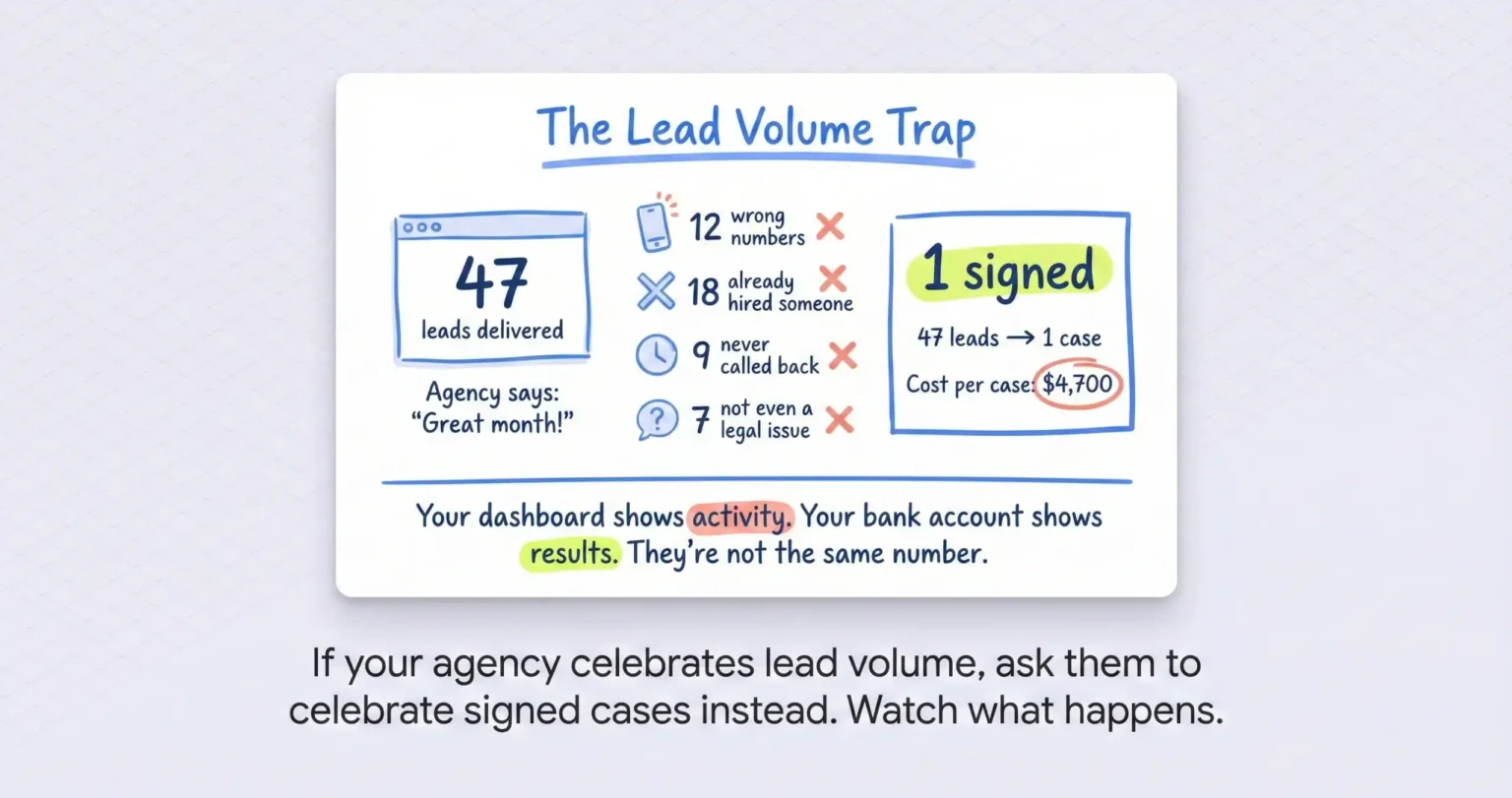
A solo attorney in Orlando called me maybe four months ago because he’d been buying shared leads from one of those aggregator sites at $75 each and his intake numbers looked terrible. He was getting 40 or 50 leads a month and signing maybe one case out of all of it, and he couldn’t figure out why because the leads looked real enough on paper.
So I asked him what the calls sounded like and he said most people were either annoyed because they’d already talked to two other lawyers, or confused because they didn’t remember filling out a form, or just didn’t pick up at all. By the time you call a shared lead, the person has already been contacted by multiple firms and they’re either gone or irritated, and you’re not competing on the quality of your firm anymore, you’re just hoping you dialed at the right second.
Why the Person on the Other End Stops Answering
Why do shared legal leads have low conversion rates? Because the person’s phone starts ringing from multiple law firms within minutes of submitting their information. By the third or fourth call from a different office, most people stop picking up, get annoyed, or decide the whole experience feels like harassment rather than help. The lead isn’t bad; the delivery model makes the experience bad for the person on the other end.
When someone fills out a form on one of those “get legal help” sites, their info gets sent to 3 to 5 firms at once, sometimes more because vendors sell to multiple aggregators who each resell to their own set of firms. I’ve talked to people who estimated 8 to 10 different offices called them from one form submission, and nobody on the buying end has any way to verify the actual count.
With an exclusive lead the person contacted your firm and nobody else. They’re not being chased by 4 other firms and they’re not overwhelmed by the time you call. Your intake person can have a real conversation because the caller isn’t trying to decide between 4 pitches in 15 minutes, and that’s most of why exclusive leads convert at 10% while shared sit at 2 or 3%.
Why Automation Doesn’t Fix It the Way You Think It Will
Can technology make shared leads work for small firms? It helps with speed but doesn’t solve the core problem. Every firm buying shared leads from the same vendor has access to the same auto-text tools, the same instant dialers, the same drip sequences. When 5 firms all send an automated text at the same second, the person gets 5 identical-feeling messages and the technological advantage cancels out. Automation makes shared leads slightly less wasteful, but it doesn’t create the exclusivity that drives conversion.
I think this is the part that trips up the smaller tech-forward firms because they assume the right automations will let them extract value from cheap leads that other firms are too slow to work. But eventually every competitor runs the same playbook and you’re all racing to send the fastest robot text to someone who’s about to block all of you, because when 5 firms all send an automated message at the same second the technological advantage cancels itself out.
The other problem is that aggressive automation makes your firm’s number look like spam. If you’re texting a shared lead 5 times in 2 days while they’re also getting 20 messages from other firms, the phone carriers start flagging your number, and now your calls to actual clients; referrals, existing cases, people who want to hear from you; show up with a spam warning. I’ve seen firms poison their own phone number chasing leads that were never going to convert and not realize it until a real client mentioned they almost didn’t answer.
What the Vendor Isn’t Telling You About Where These Leads Come From
How do shared legal lead vendors generate their leads? Many use broad advertising, survey-style forms, or incentivized clicks where the person didn’t realize they were requesting a lawyer. Some vendors recycle old leads and resell them as fresh. The vendor gets paid on delivery, not on whether the lead converts, which means their incentive is to widen the filter and send volume. When you dispute a bad lead, many vendors have strict no-credit policies or require you to submit proof like disconnected number screenshots, which turns disputing into its own part-time job.
I’m not saying every shared lead vendor is doing something shady, but the business model creates an incentive problem that most small firms don’t think about. The vendor makes money every time they deliver a data point. They don’t make more money if that data point becomes a signed case. So the cheapest way for them to operate is to buy the broadest, cheapest traffic possible and sell it as many times as they can.
Some of that traffic comes from ads promising “government compensation” or “free claim check” where the person clicked thinking they were getting information, not requesting a lawyer. When your firm calls and says “hi, I’m an attorney calling about your injury” the person has no idea what you’re talking about, and your intake person just wasted 10 minutes on someone who didn’t want legal help. And when you try to dispute the lead, most vendors have strict no-credit policies or require you to submit call logs and disconnected number screenshots, which turns disputing into its own unpaid job.
The Risk Nobody Mentions Until It’s a Problem
What legal risks come with buying shared leads? The biggest is the Telephone Consumer Protection Act, which carries fines of $500 to $1,500 per call or text if you contact someone without proper consent. In shared lead flows, the consent trail is often unclear because the person agreed to terms on a third-party site that may not name your firm directly. Some plaintiffs’ attorneys deliberately seed shared lead pools with phone numbers designed to trap firms into violations. Beyond legal liability, aggressive follow-up on shared leads generates negative reviews from people who felt harassed, and for a small firm a few 1-star reviews on Google can damage the local rankings you’re spending money to build.
I probably should have led with this because for a solo or small firm the real downside isn’t just losing money on leads that don’t convert, it’s getting sued for calling someone who technically didn’t consent to hear from your firm. The consent language on aggregator forms is usually buried in fine print that says something like “by submitting you agree to be contacted by our partners” and whether that covers your specific firm using an autodialer is a question with a not-great answer.
The review damage is real too, because I’ve seen firms pick up 1-star reviews from people who wrote things like “this firm called me 6 times and I never asked for a lawyer” and that review sits on your Google profile forever, right next to the ones from your actual clients who love you. For a small practice where your website and local presence are how people find you, that kind of damage is hard to undo.
What Actually Makes More Sense for a Small Firm
Should small law firms buy exclusive or shared leads? Exclusive, unless the math clearly works otherwise in your specific situation. A $300 exclusive lead converting at 10% costs about $3,000 per signed case. A $100 shared lead converting at 2.5% costs about $4,000 per case in lead fees alone, before staff time, before vendor disputes, before the automation tools you need to compete. If budget is tight, buy fewer exclusive leads rather than more shared ones. Use the time your team saves to provide better intake on the leads you do get, and start building your own lead sources through SEO and content so you’re not dependent on any vendor long-term.
If a firm spending $3,000 a month on shared leads is signing one case, they could put that same $3,000 into 10 exclusive leads, probably sign the same one case, and get back all the hours their team wasted chasing 30 contacts that went nowhere. For a solo or two-person office that’s the difference between staying late every night working dead leads and going home at a normal time.
The long play is building your own leads through SEO and content because organic traffic is exclusive by default; nobody else is calling on someone who found your site and dialed your number. That takes 6 to 12 months though, and exclusive purchased leads fill the gap while it builds. If you have to use shared leads to fill a pipeline gap, keep it under 20% of your budget, automate the initial contact so your team only talks to ones who respond, and treat it as temporary, not a growth strategy.
Not sure what your leads are actually costing per signed case?
Send me your last 90 days of lead data separated by source and I’ll calculate the real cost per case for each one. If the shared leads are working I’ll tell you. If they’re not, you’ll see exactly where the money is going and we can talk about what to do instead.